Lisbon
Date:
2025
In an 18th-century Lisbon building originally stripped of its Pombaline architectural identity, Studio AVA undertook a complete restoration — not as replication, but as cultural synthesis.
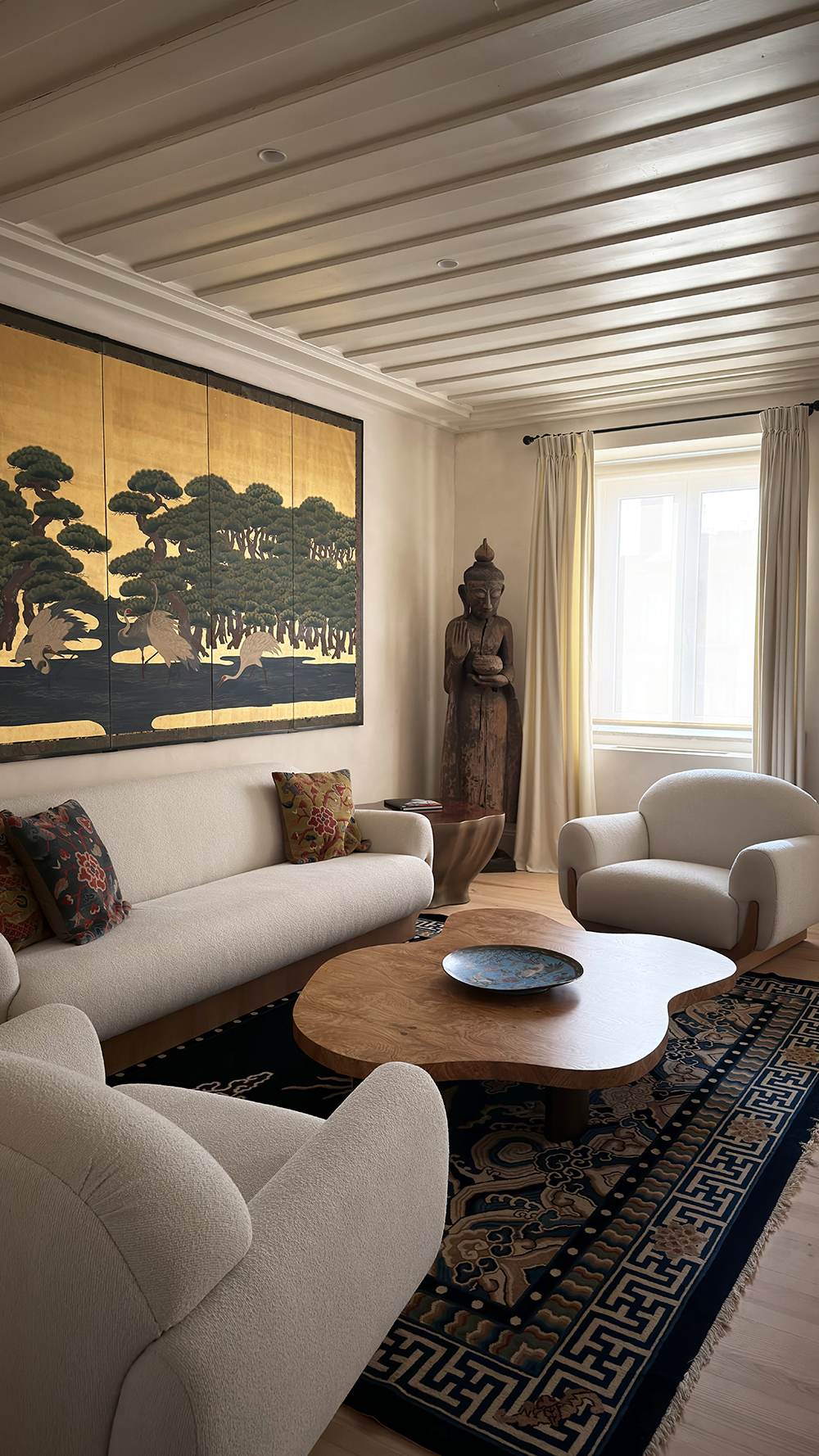
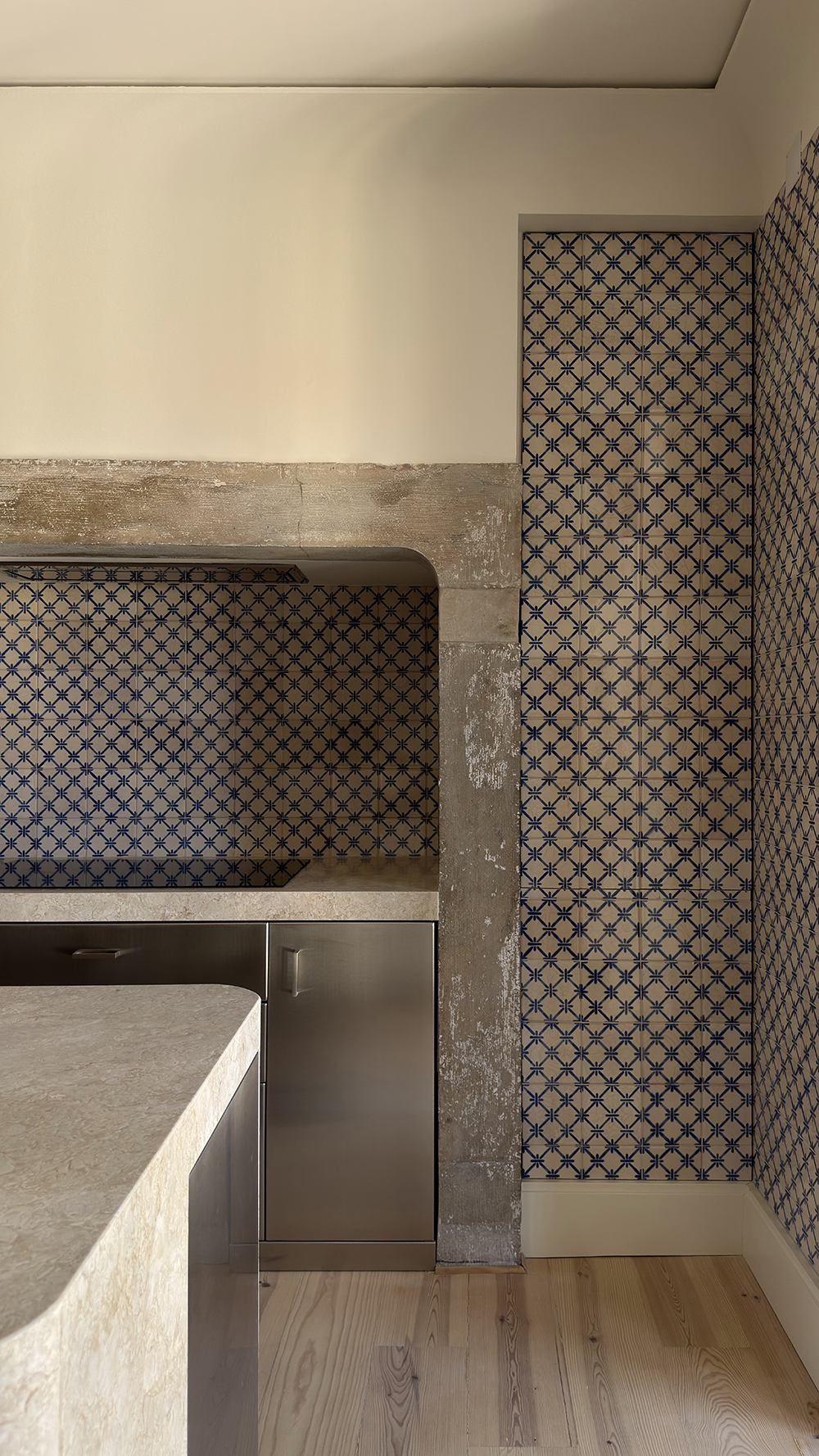
The apartment had lost its defining features: wood “saia e camisa” ceilings, handpainted blue and white tiles, architectural rhythm. The intervention reintroduced these elements with precision, reinstating historical integrity while introducing a cosmopolitan narrative shaped by the client’s Asian art collection and Americaninfluenced lifestyle.
This is not a revival.
It is a dialogue between Lisbon and Asia.
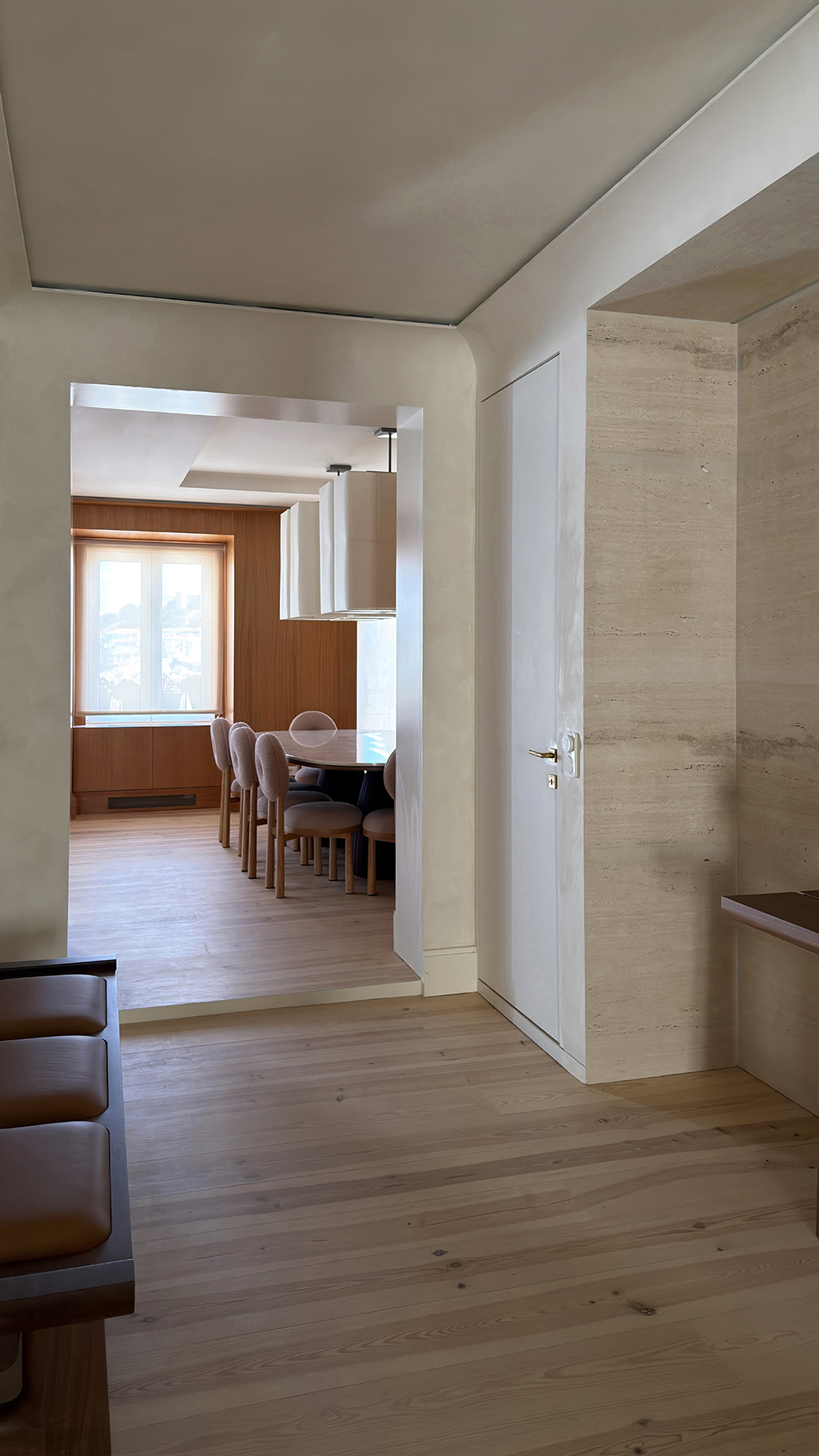
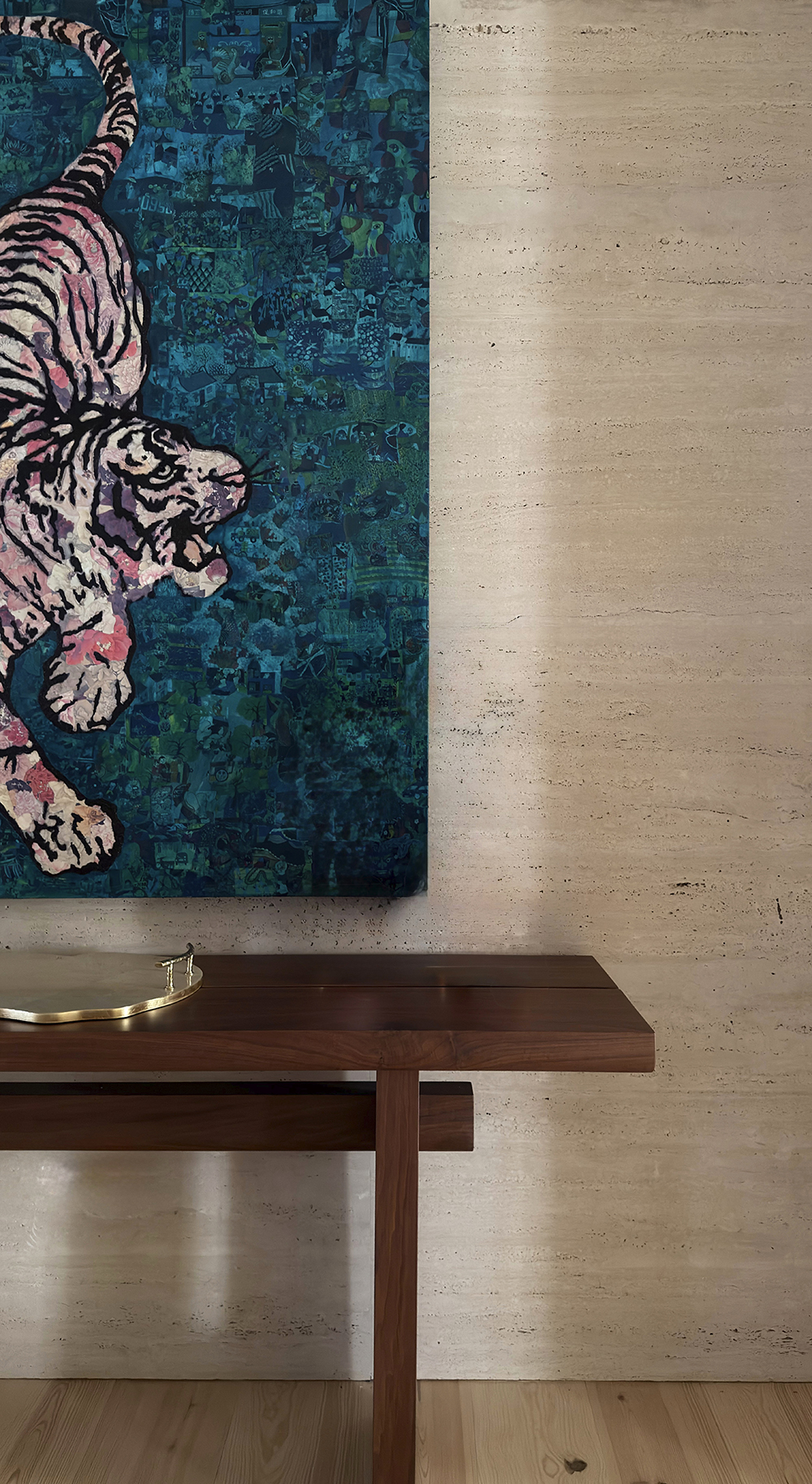
A monumental travertine wall anchors the entrance, framing a work by Xue Song.
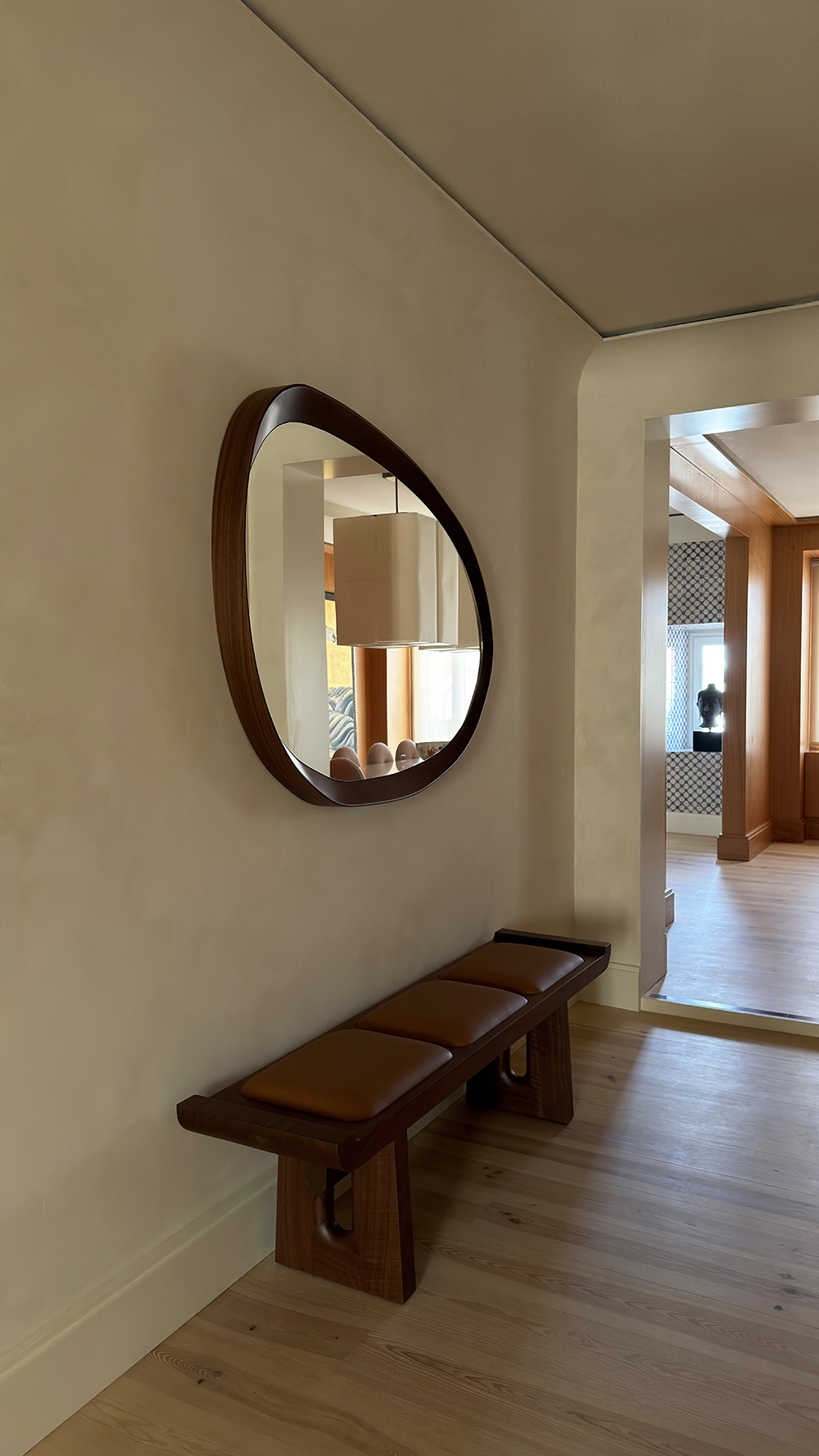
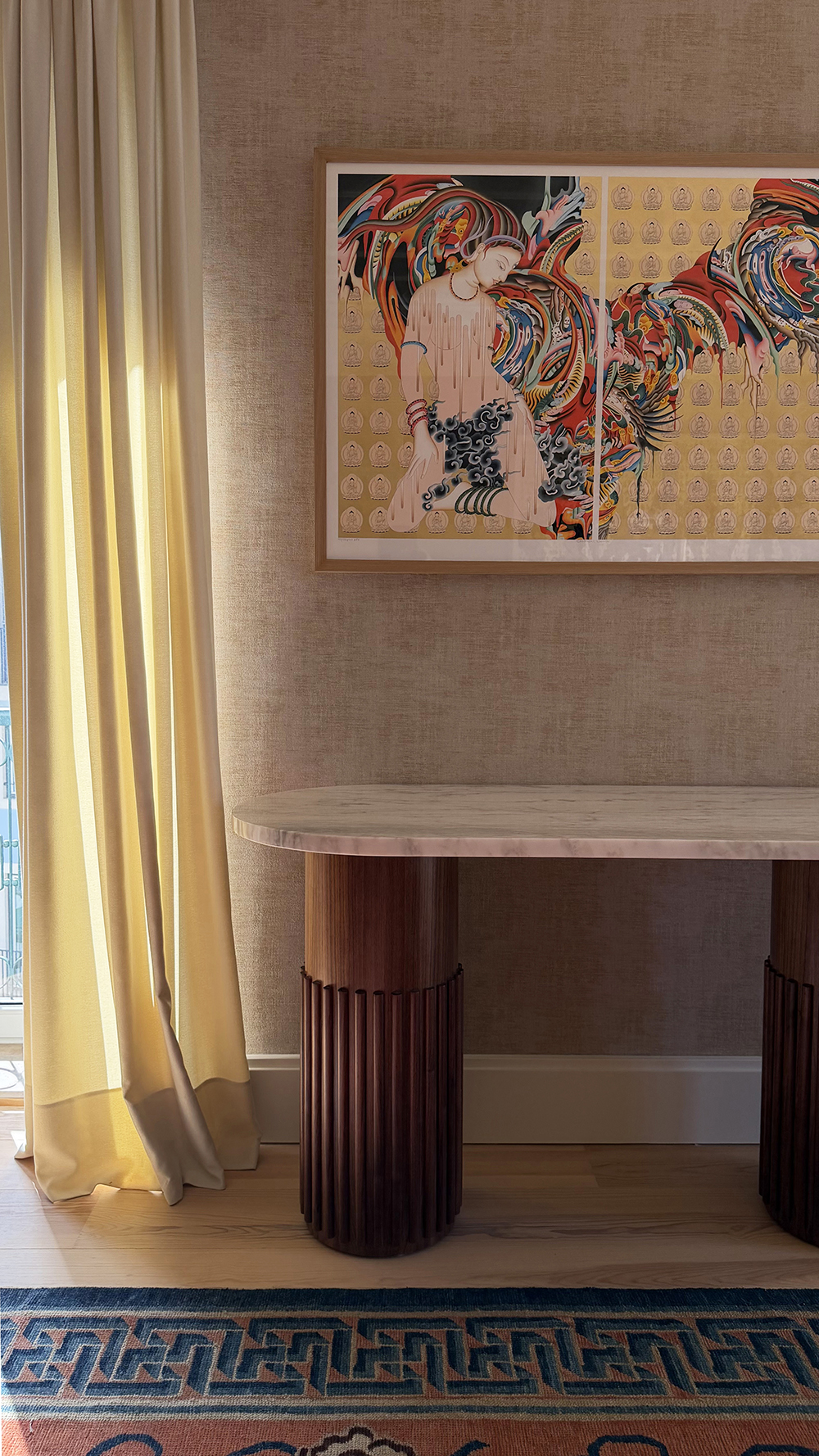
A console inspired by the geometry of a Japanese torii gate introduces ceremonial symmetry. A custom bench and mirror, designed by André Vilar de Azevedo, reinforce the architectural axis.
The tone is established immediately: material, symbolic, calibrated.
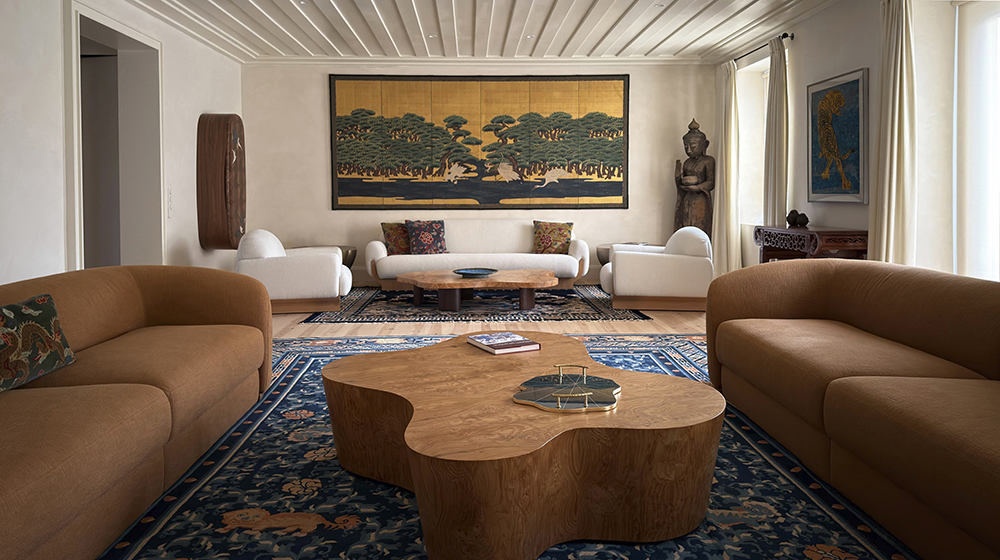
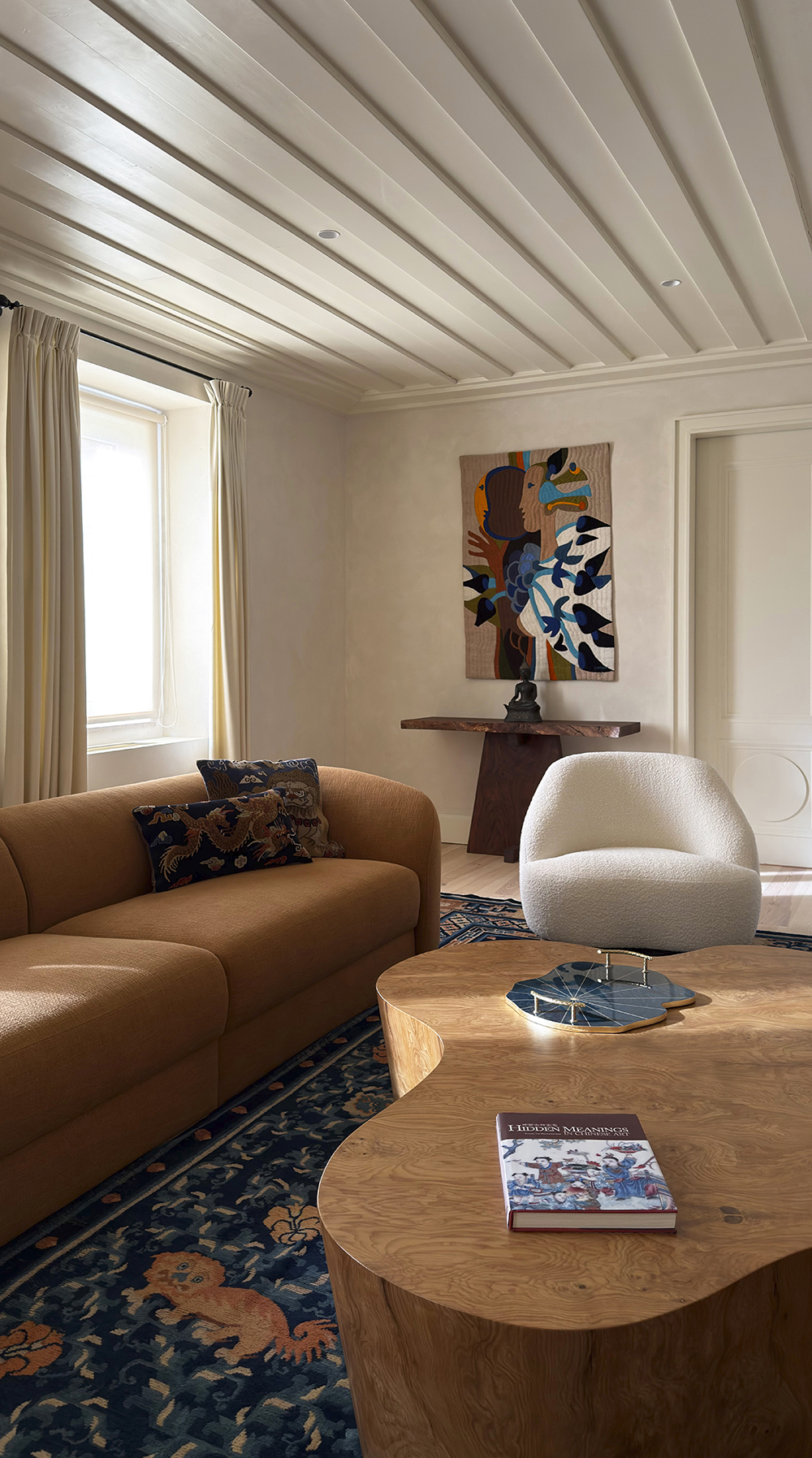
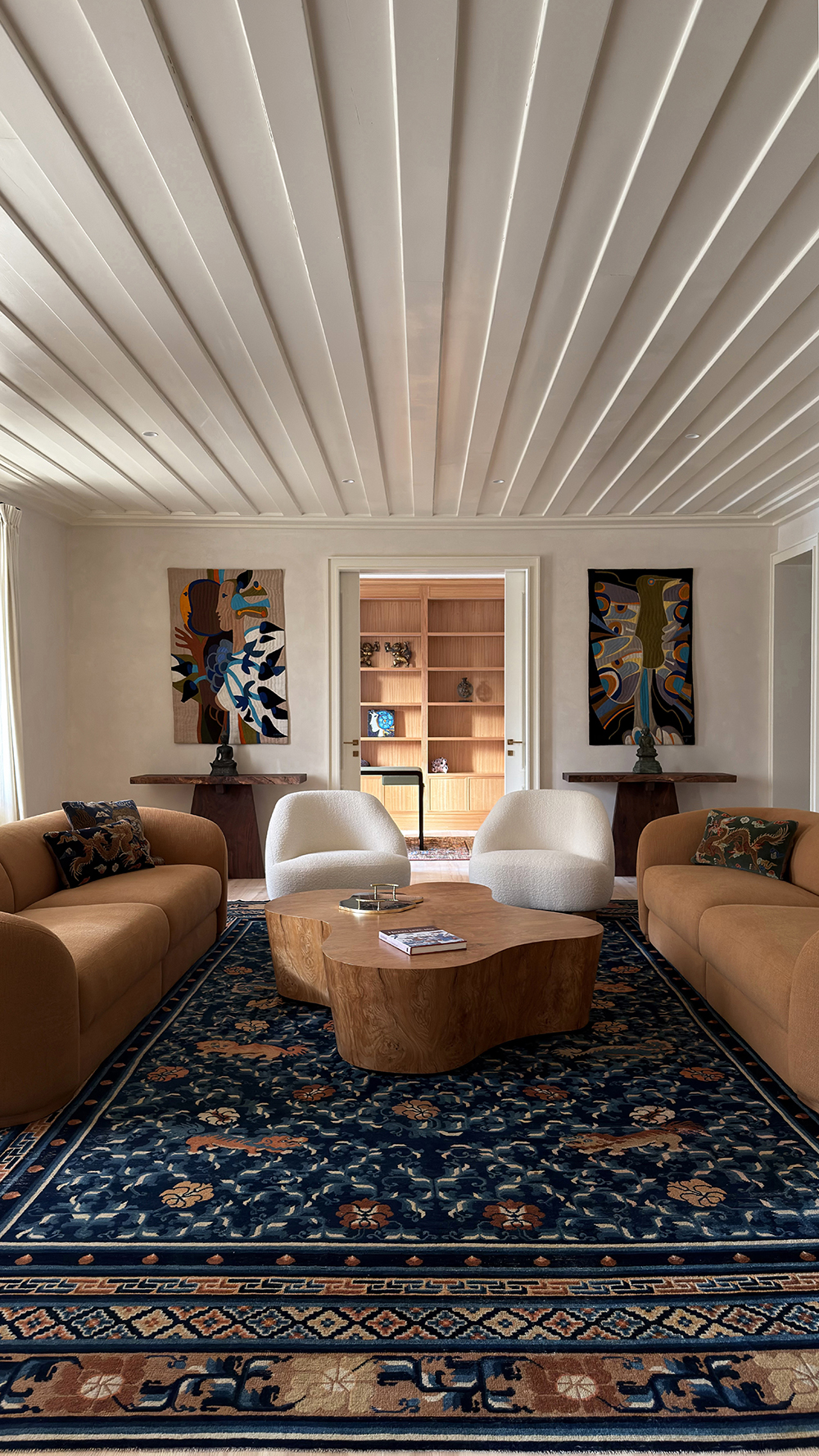
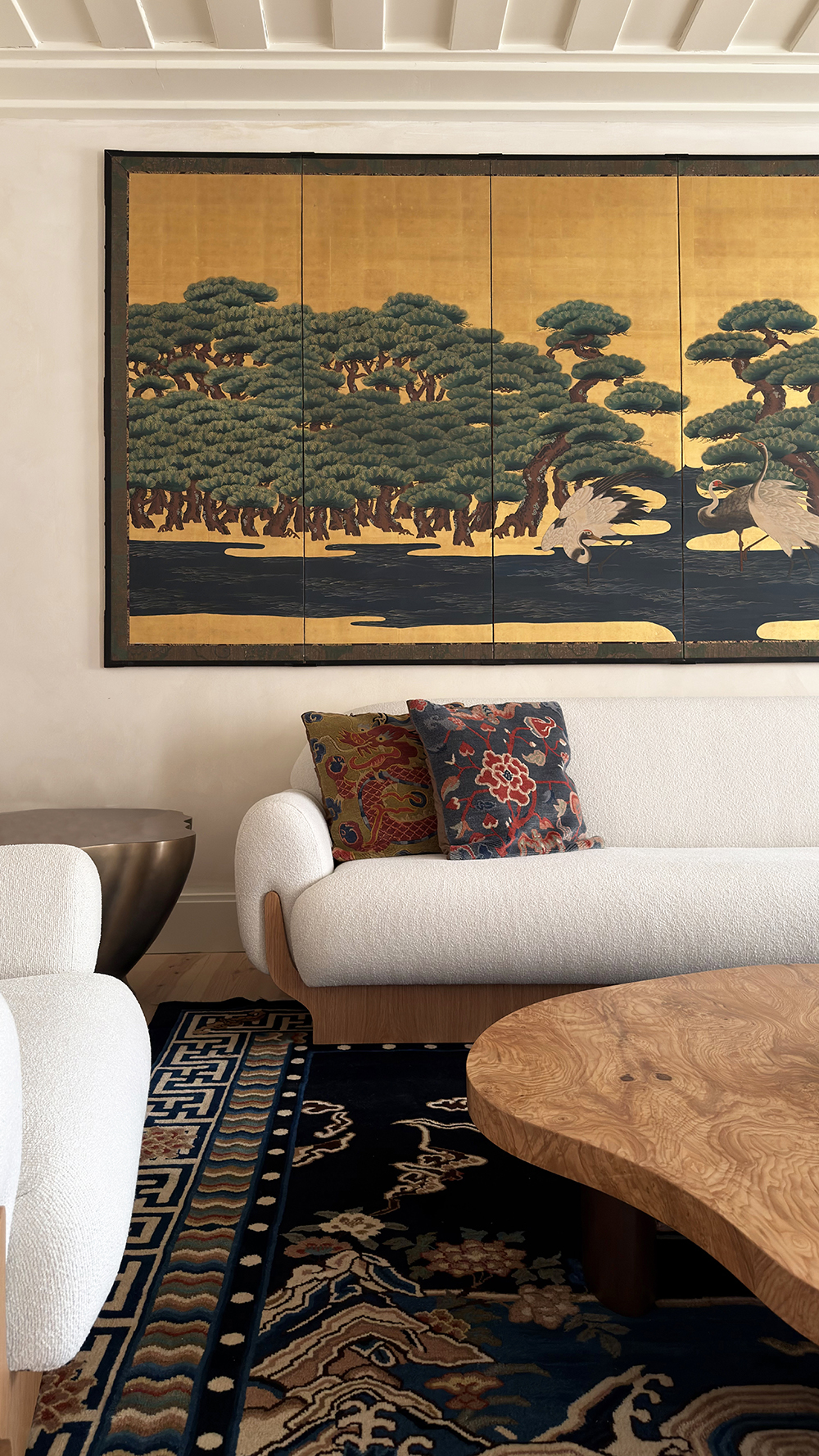
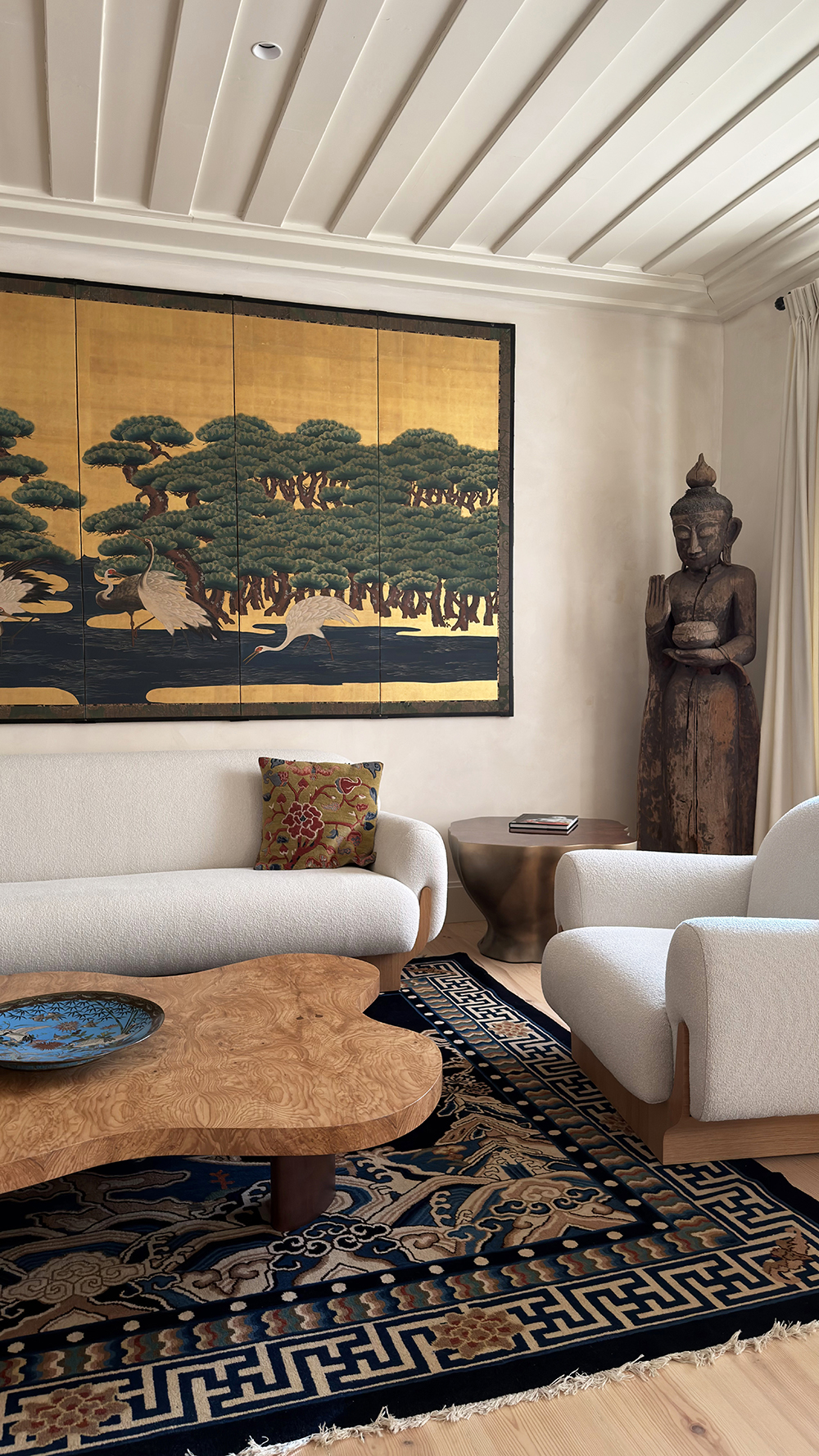
White seating by Duist contrasts with terraco4a sofas designed by the architect. Olive wood burl coffee tables introduce weight and tactility also design by the architect. Two Arbor side tables by Karpa punctuate the layout, introducing sculptural refinement.
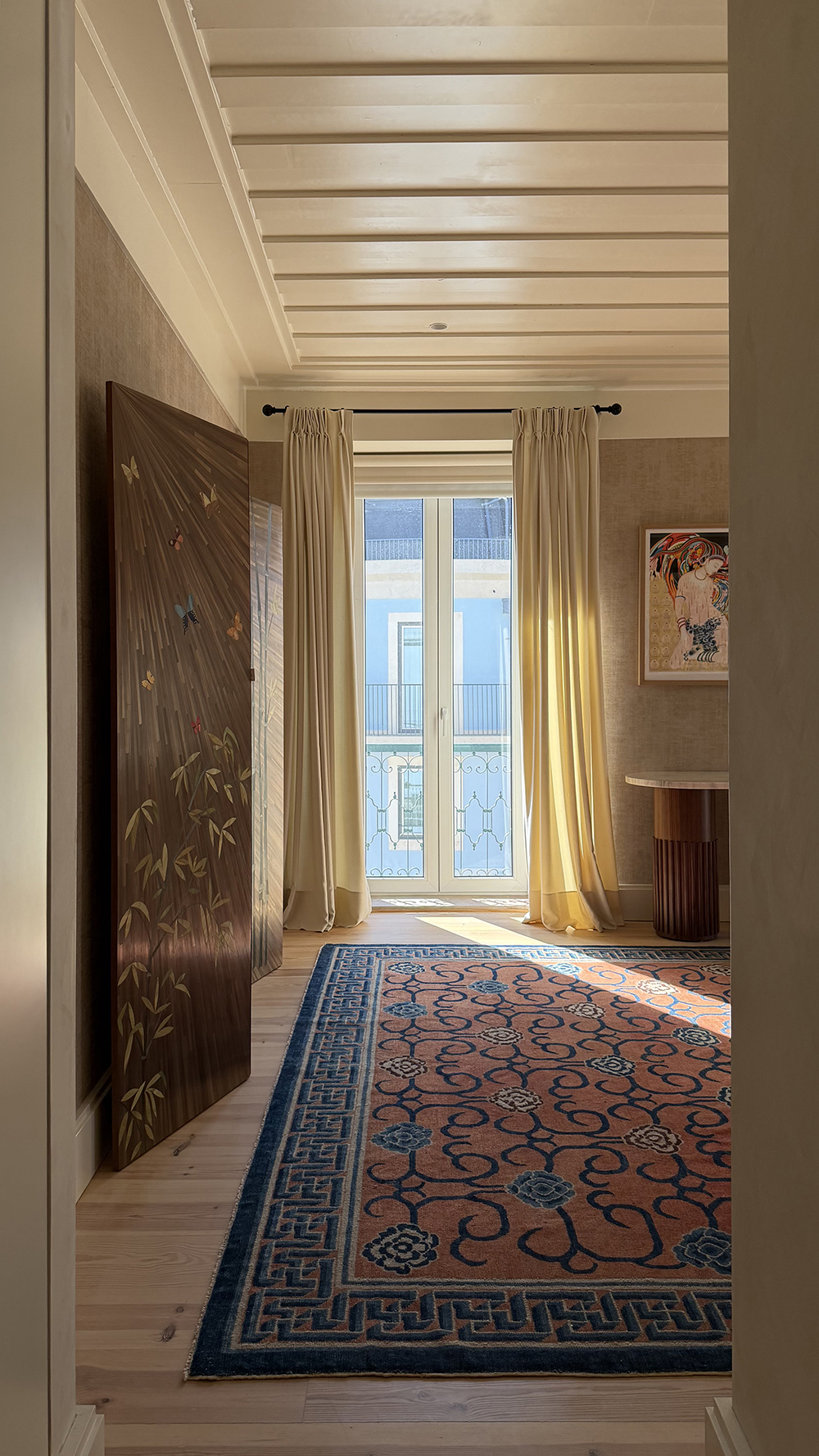
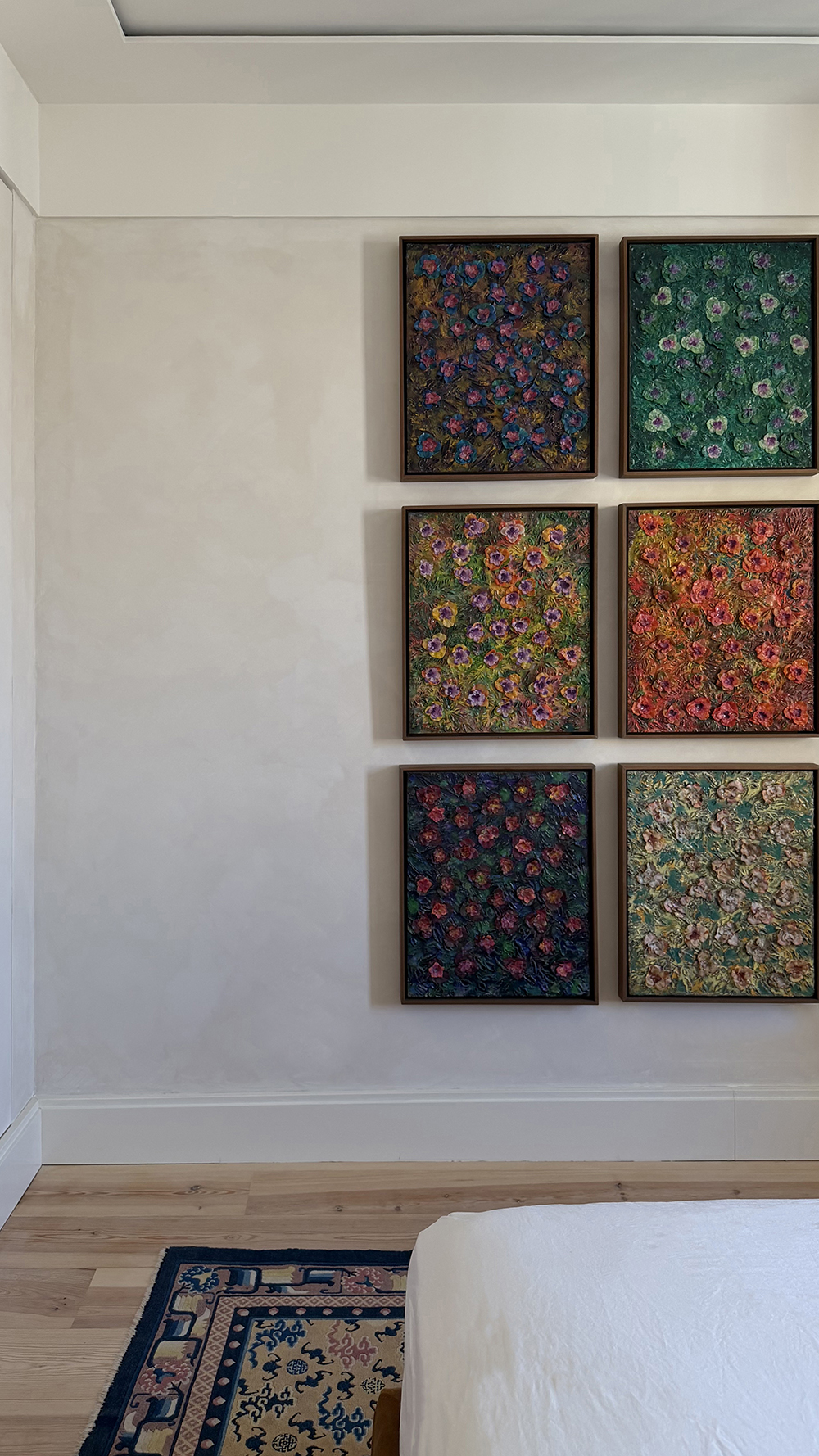
Vintage Asian carpets layer the floor. Japanese gilded panels and antique consoles create depth. A Buddha sculpture rests quietly within the composition.
A cabinet by Nada Debs adds cross-cultural craftsmanship. The space feels global, but never eclectic.
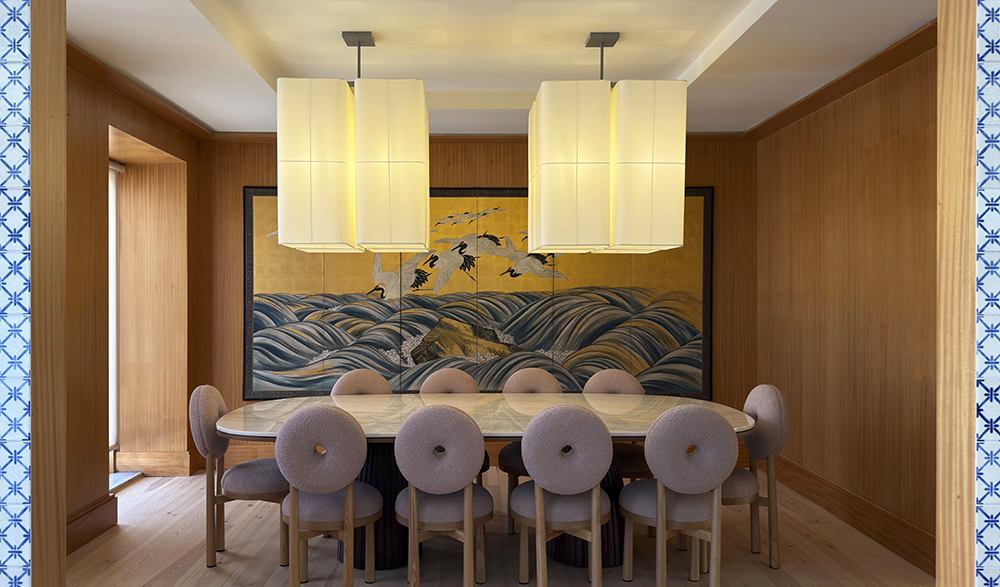
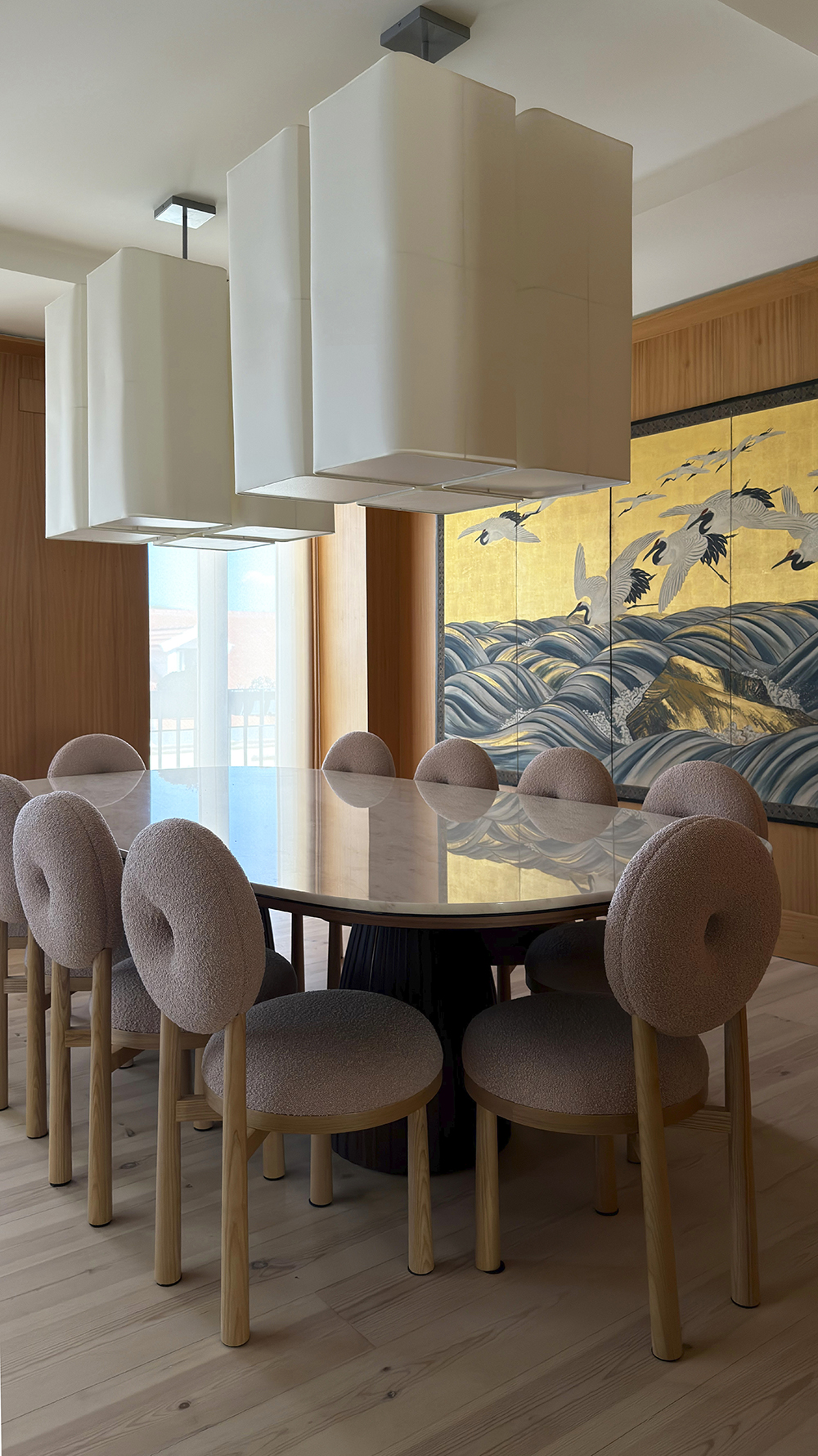
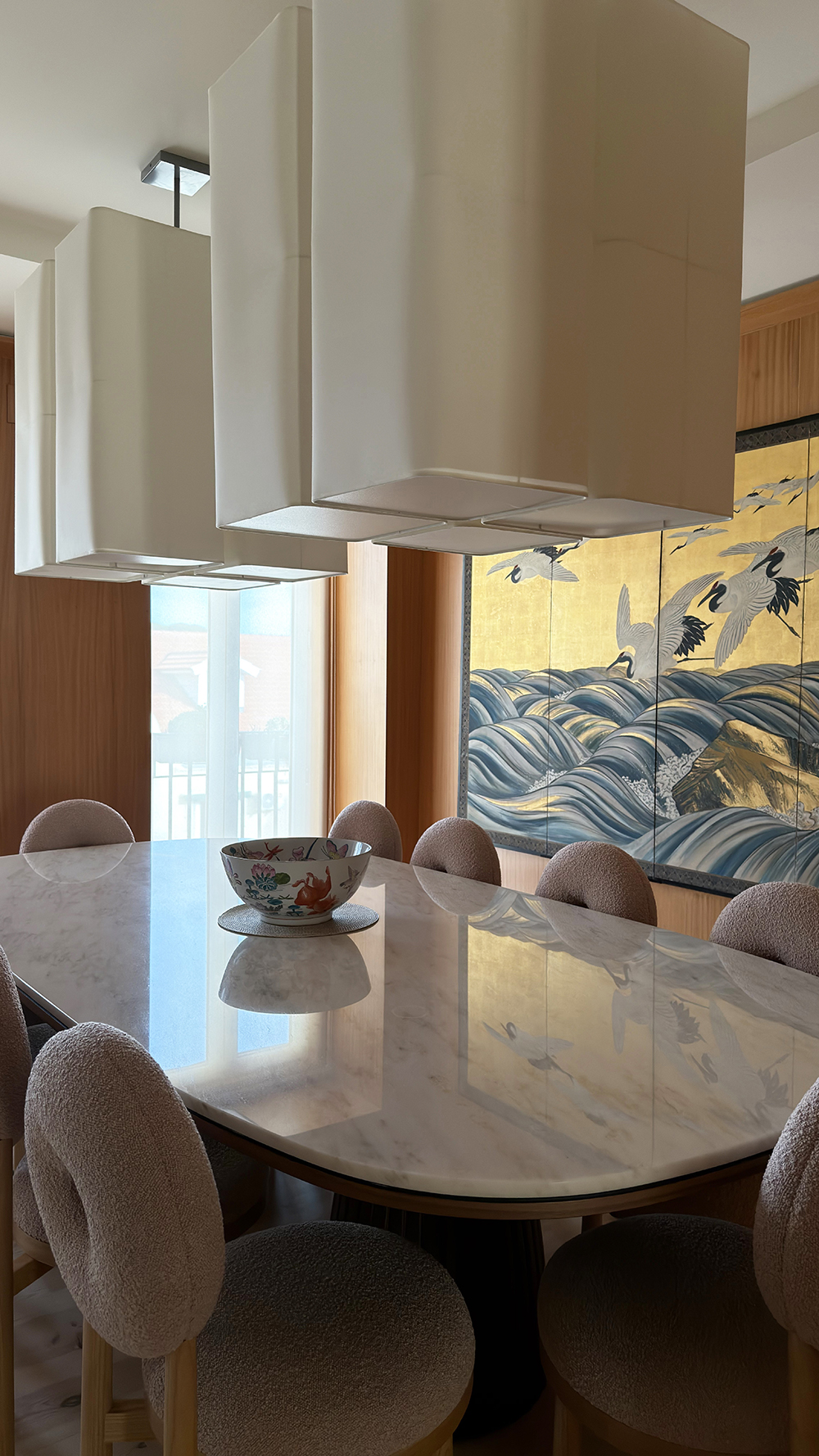
Overscaled Asian paper lanterns from the client’s collection float above a customdesigned dining table by Studio AVA.
Chairs by Salaterra Deco frame the composition, while a Japanese wall panel introduces narrative texture.
The restored Pombaline ceiling remains untouched — history framing modern ritual.
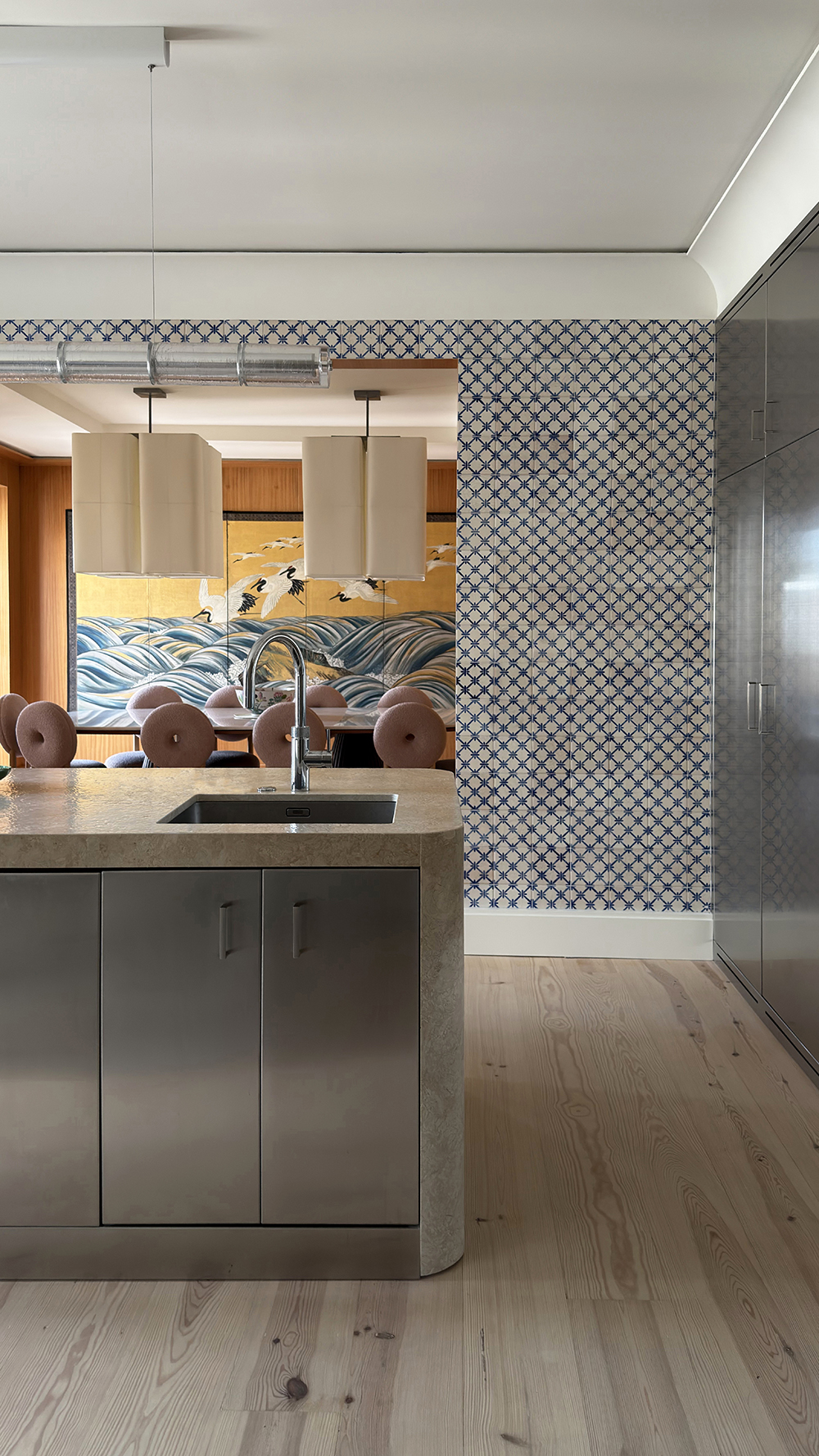
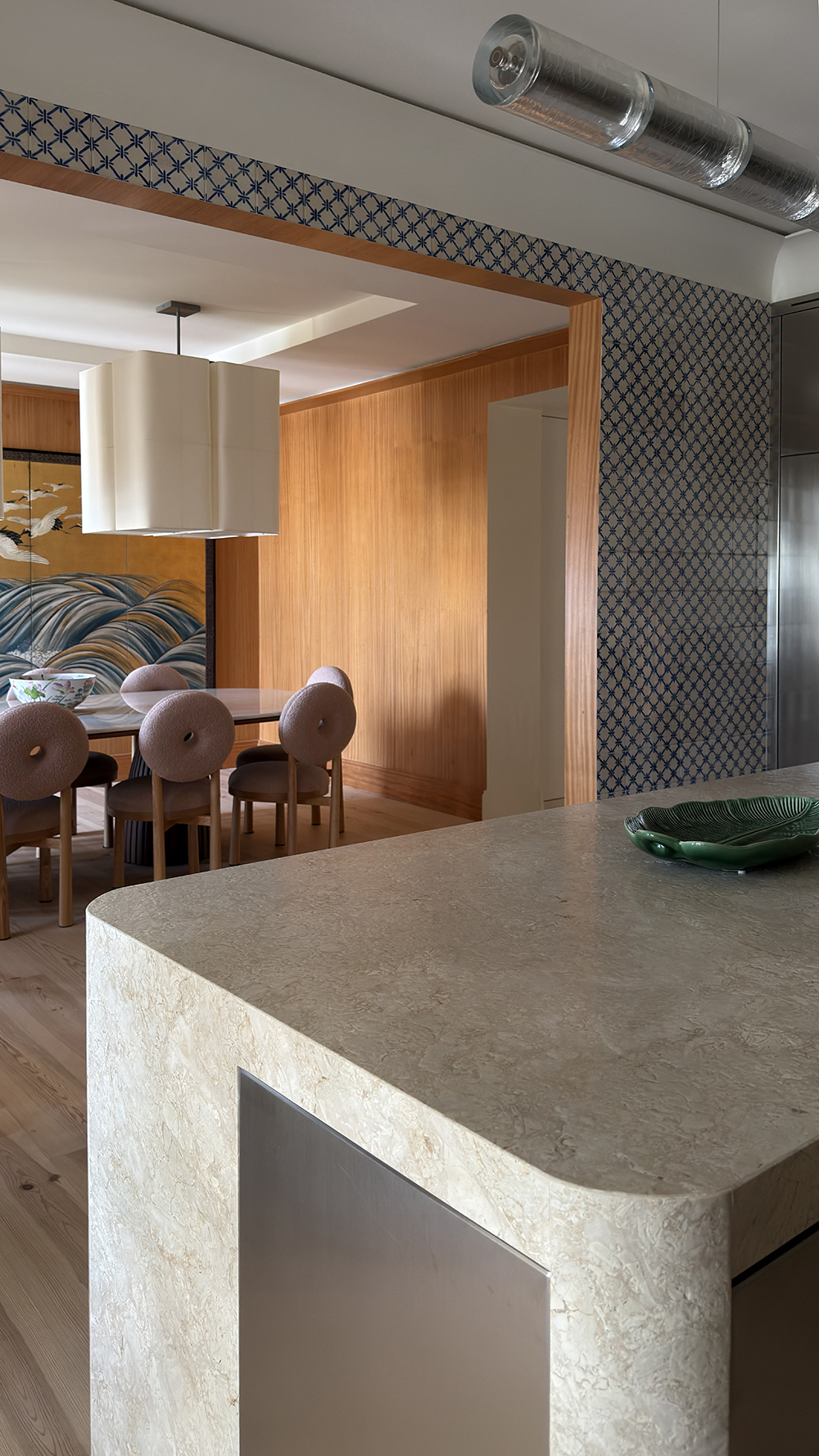
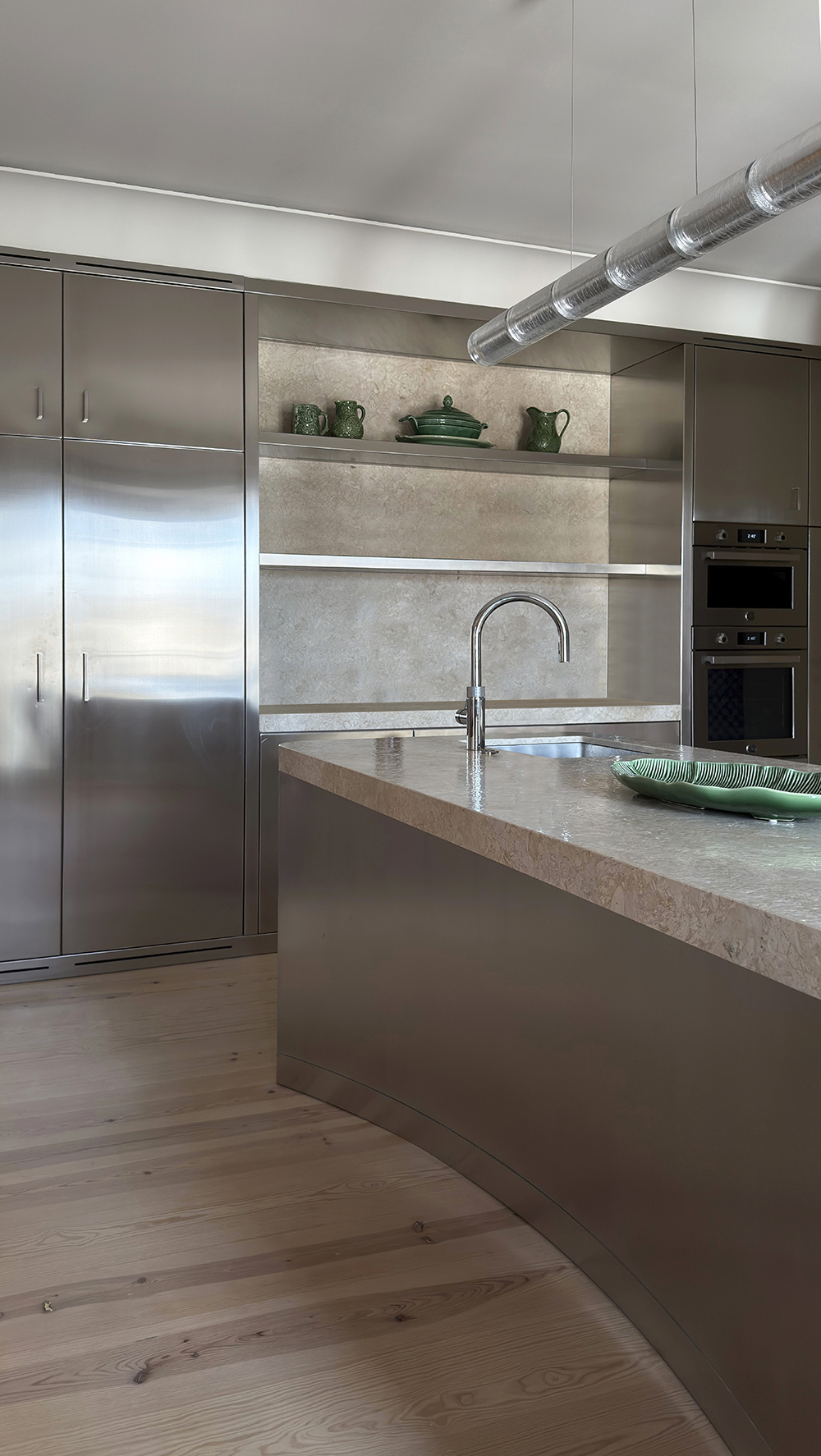
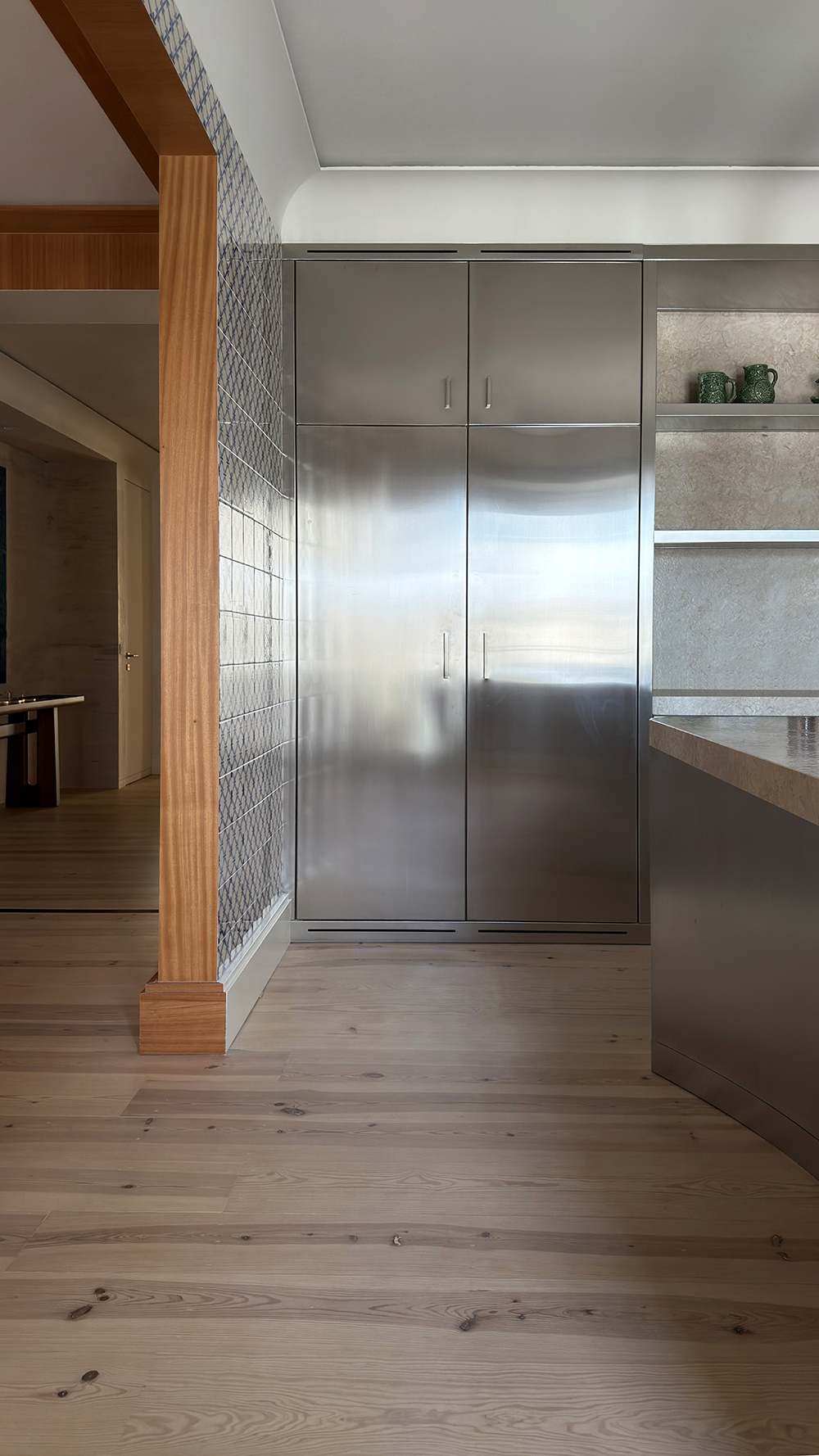
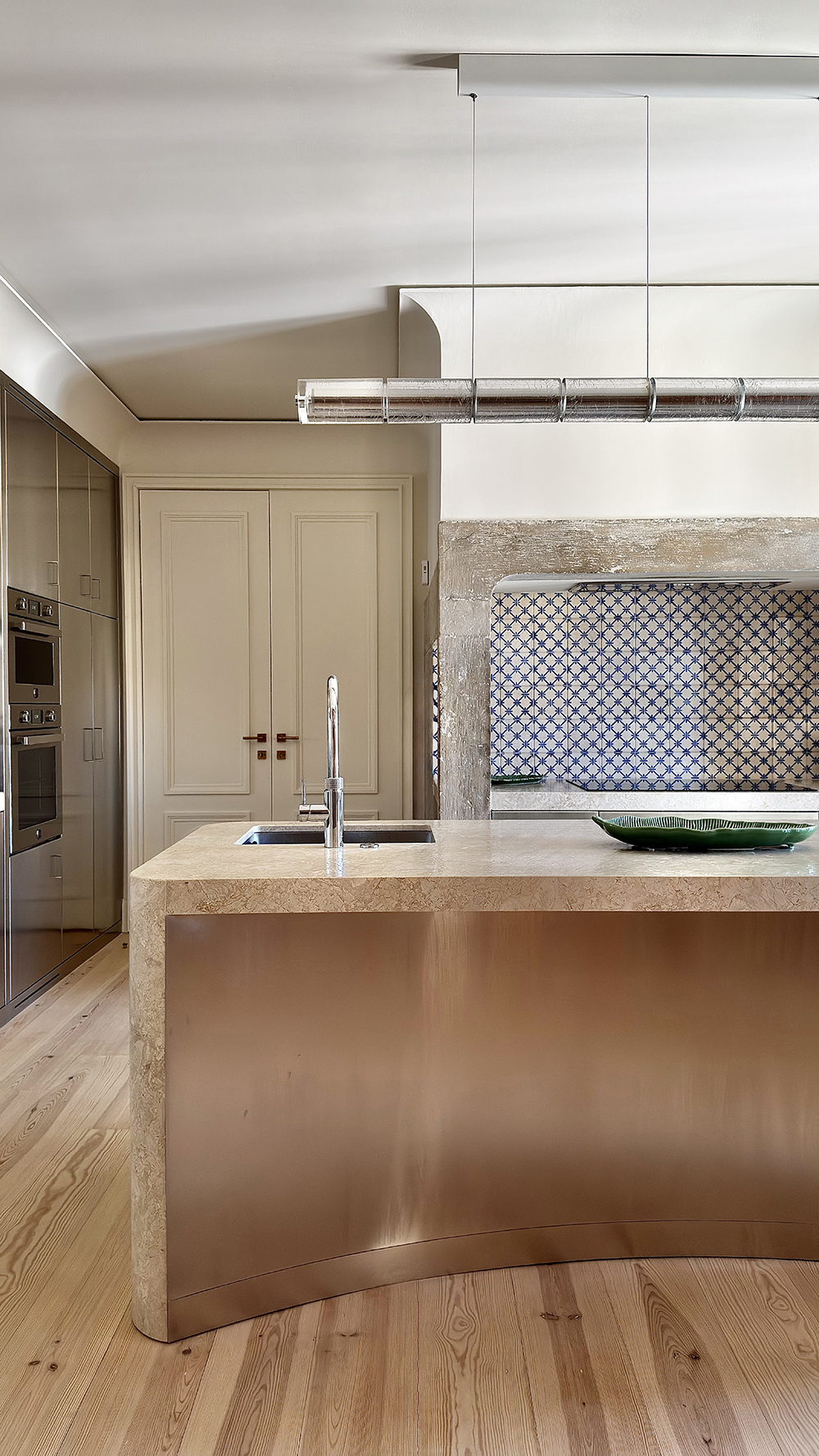
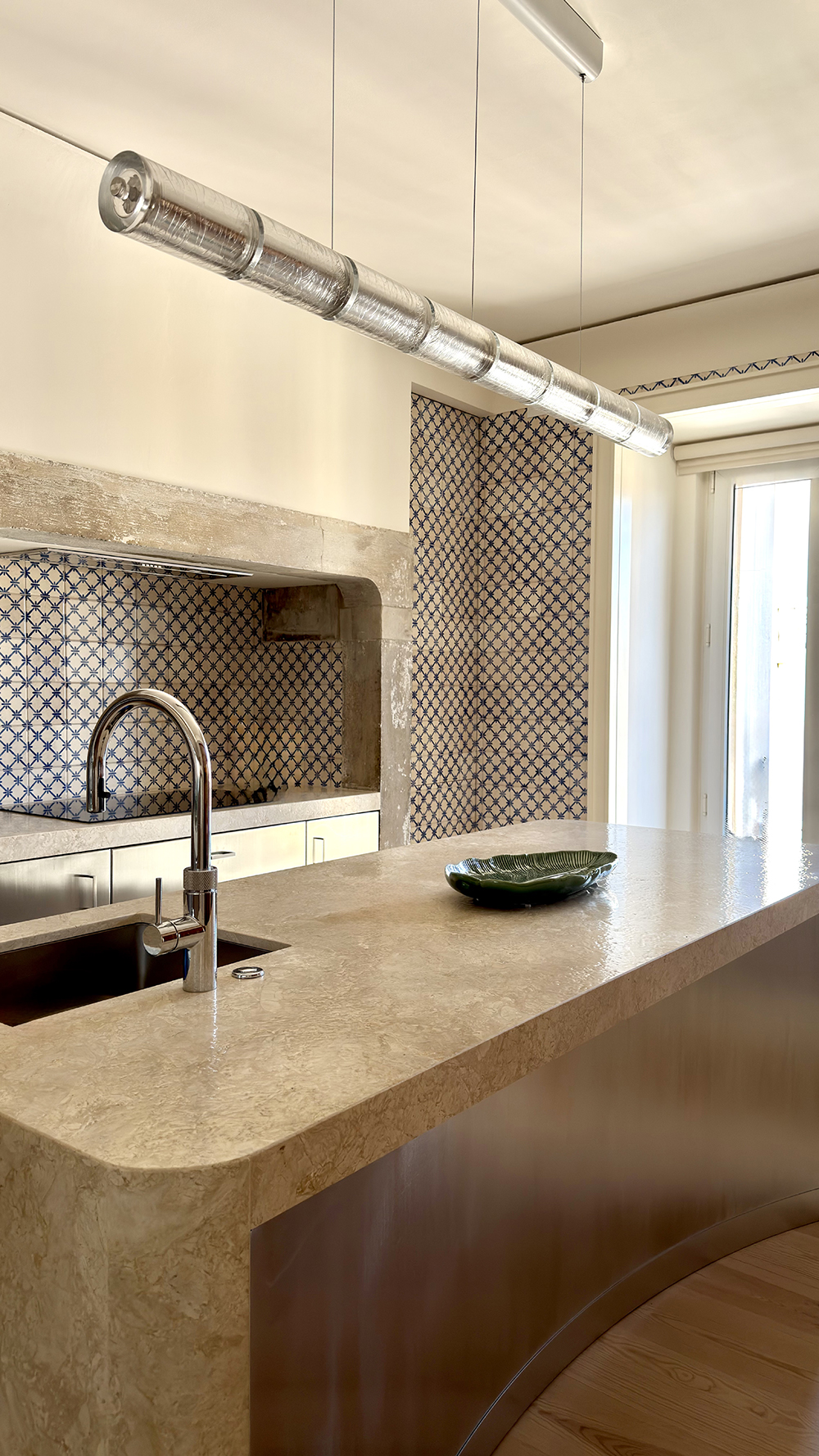
An open kitchen anchored by a polished stainless-steel island introduces contemporary clarity.
The contrast with traditional hand-painted blue and white tiles is intentional. It creates tension without rupture.
Ceramics by Rafael Bordalo Pinheiro punctuate the space, reinforcing Portuguese material identity within a global context.
A leather desk grounds the workspace.
A ceramic panel by Querubim Lapa adds sculptural rhythm, merging Portuguese modernism with the broader narrative of material authenticity.
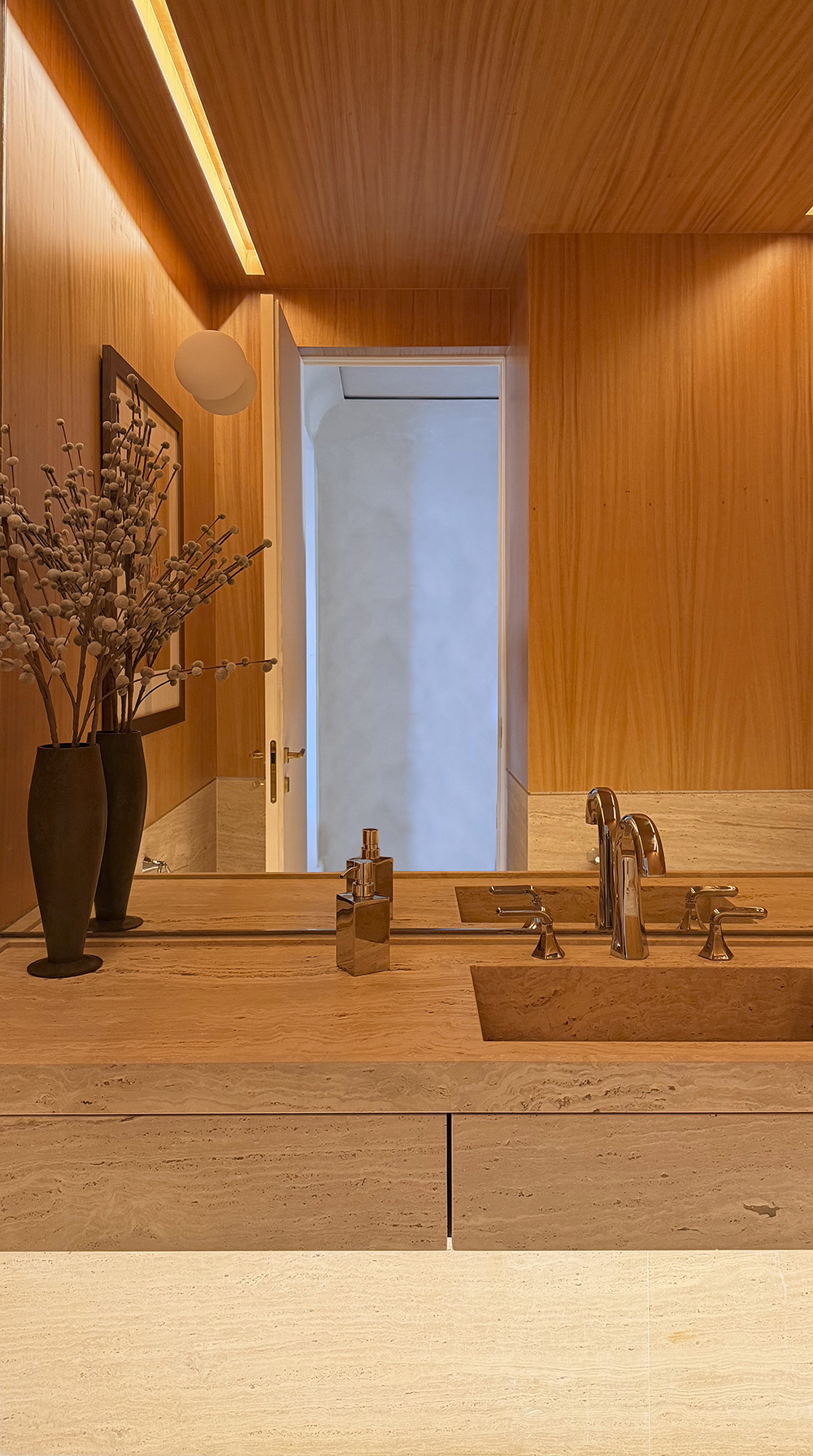
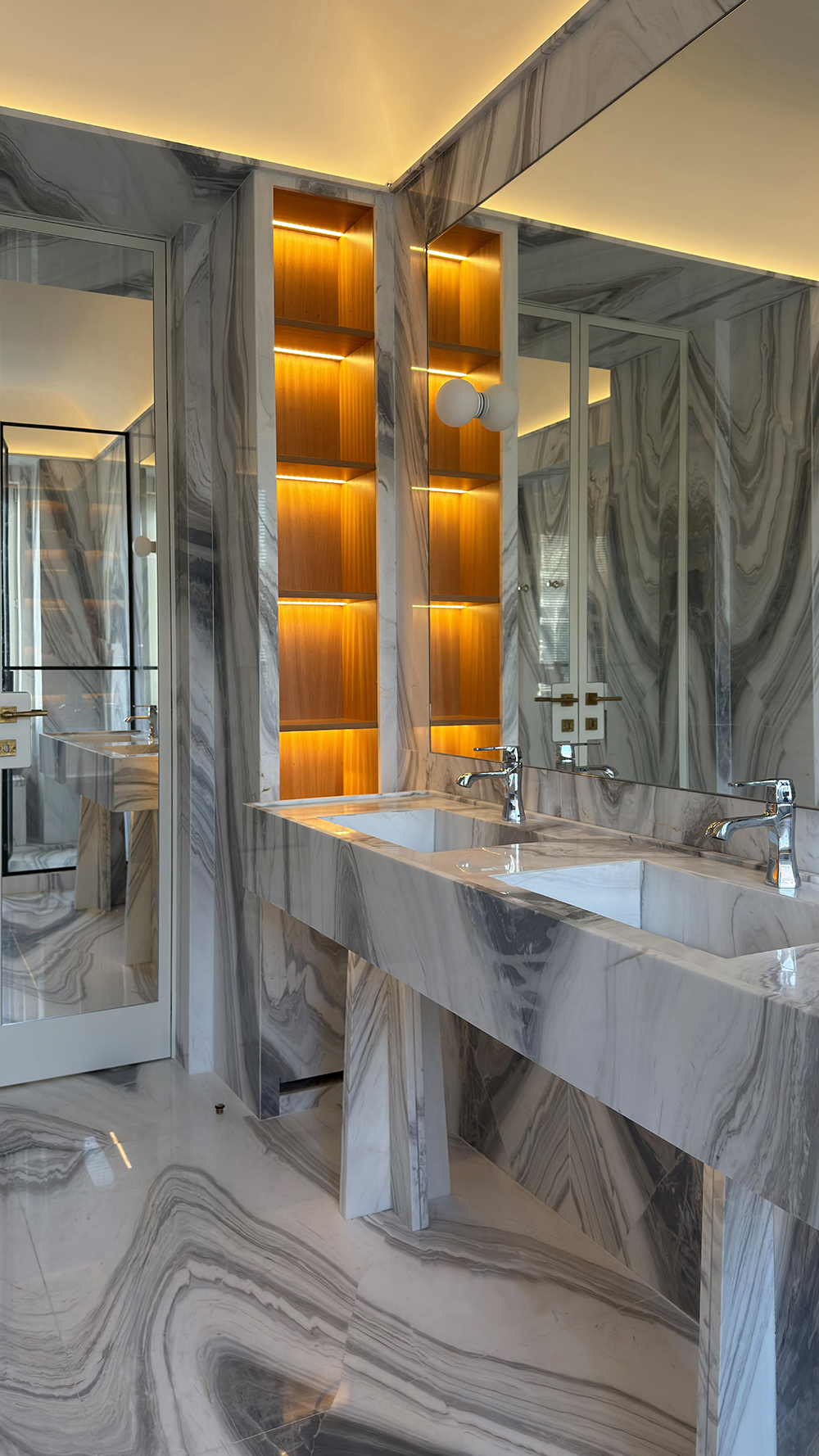
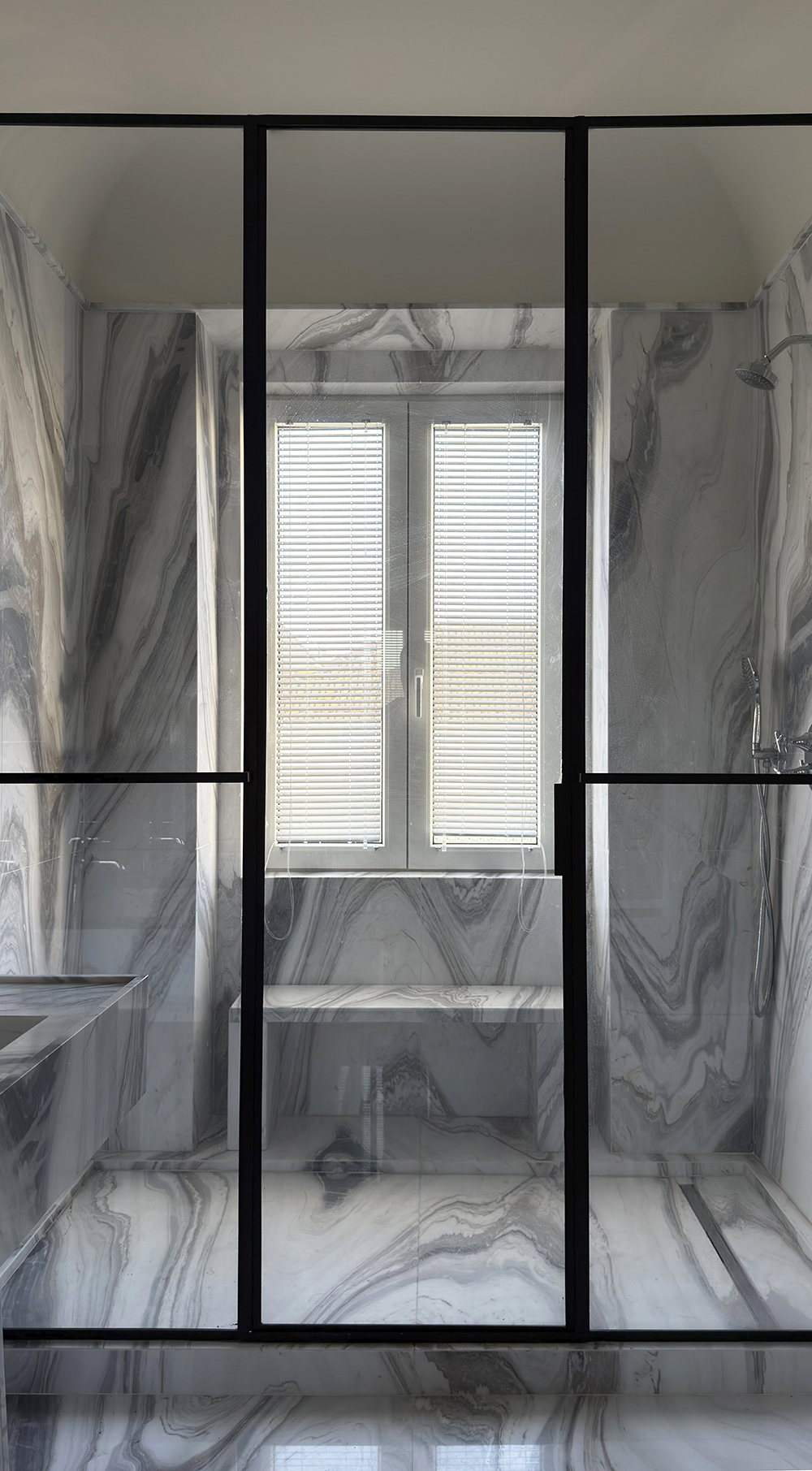
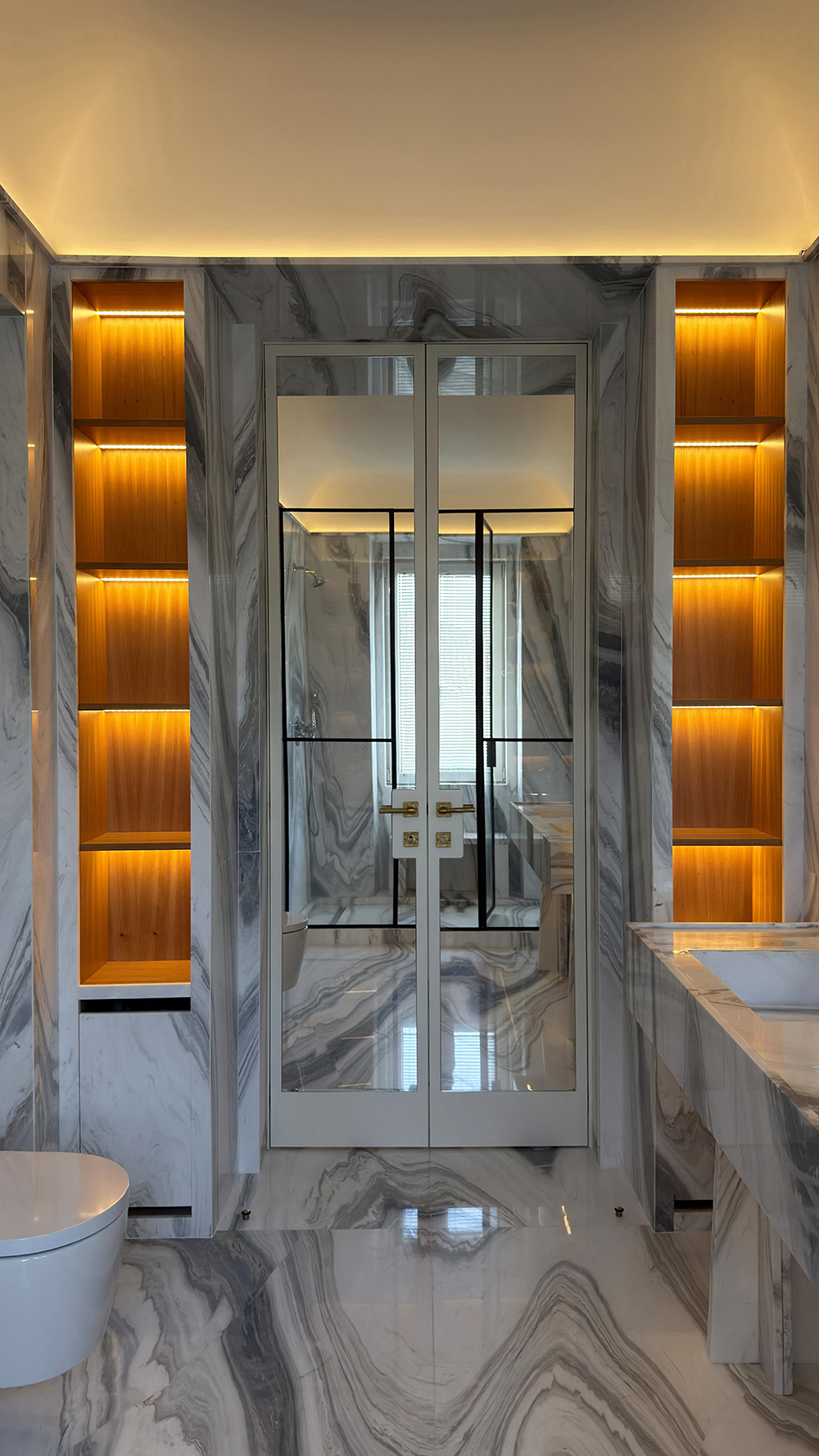
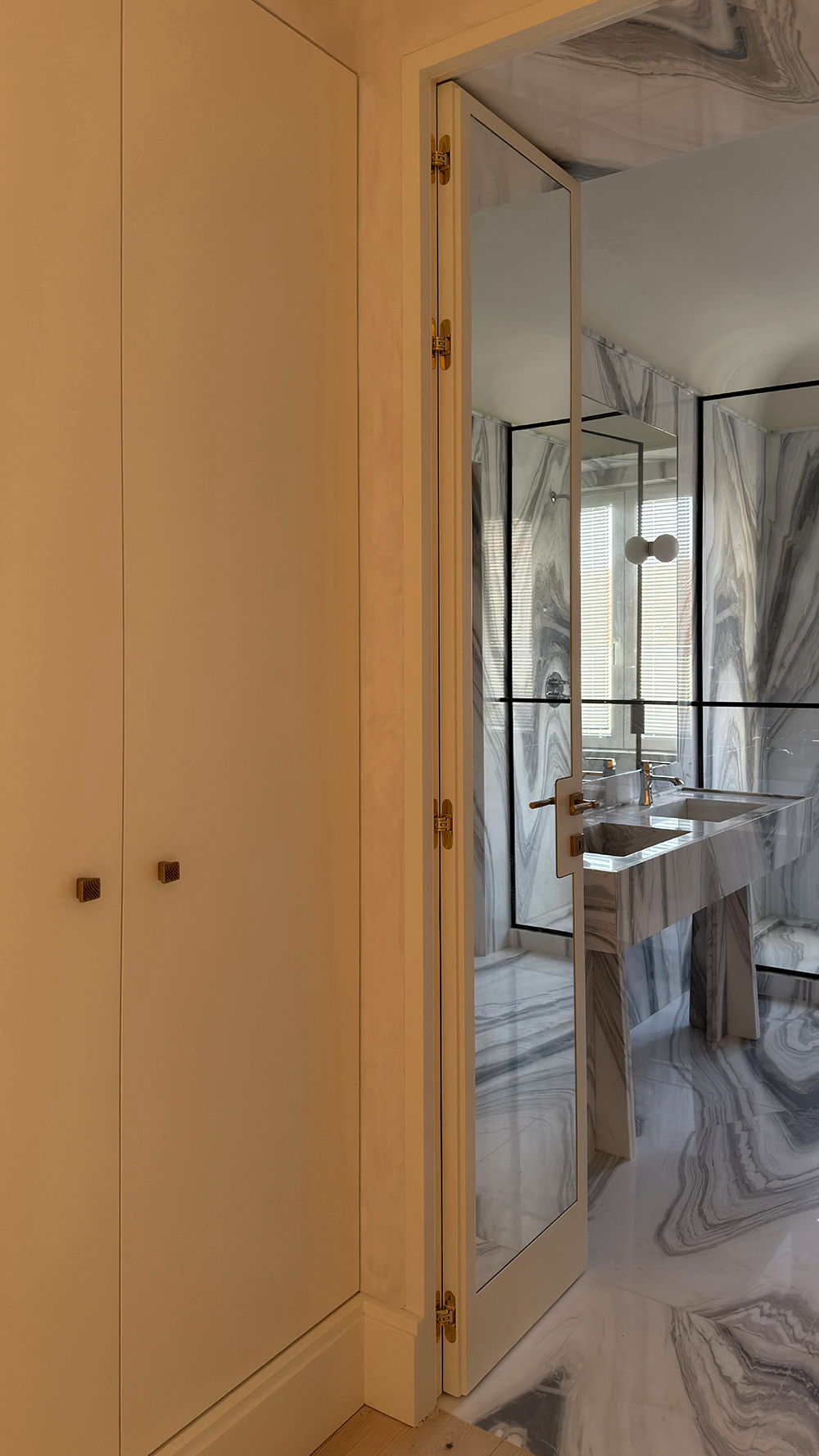
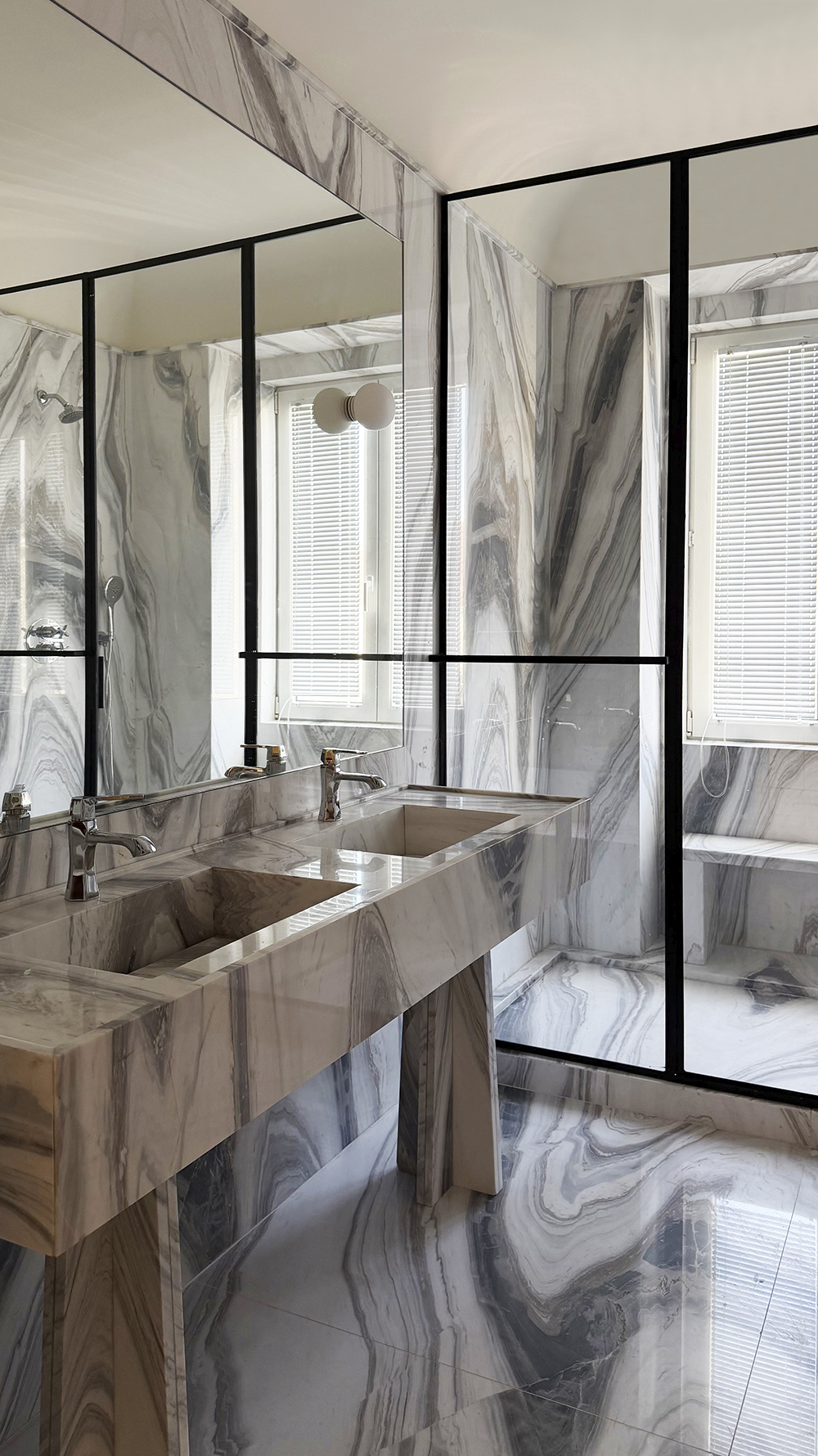
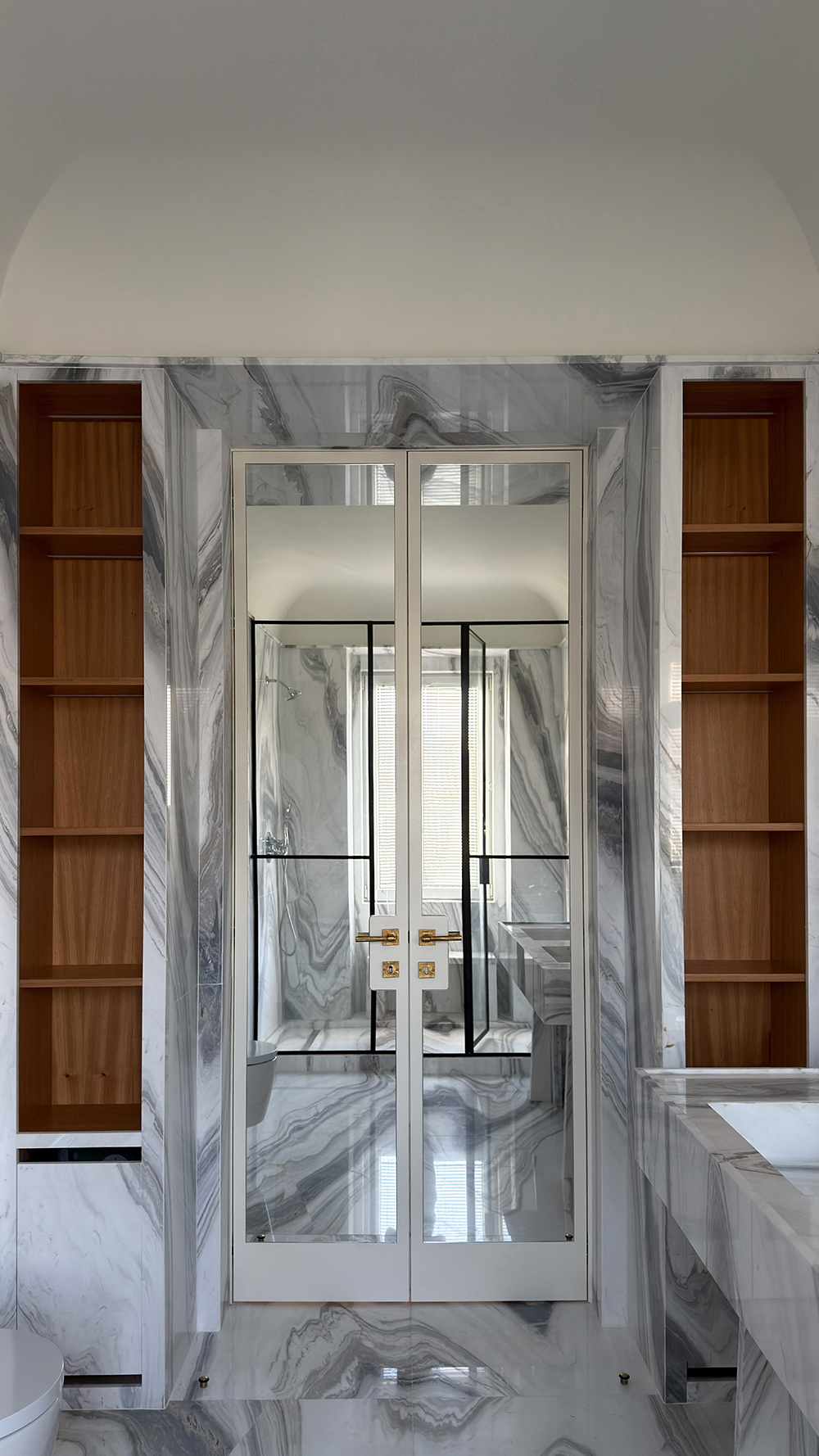
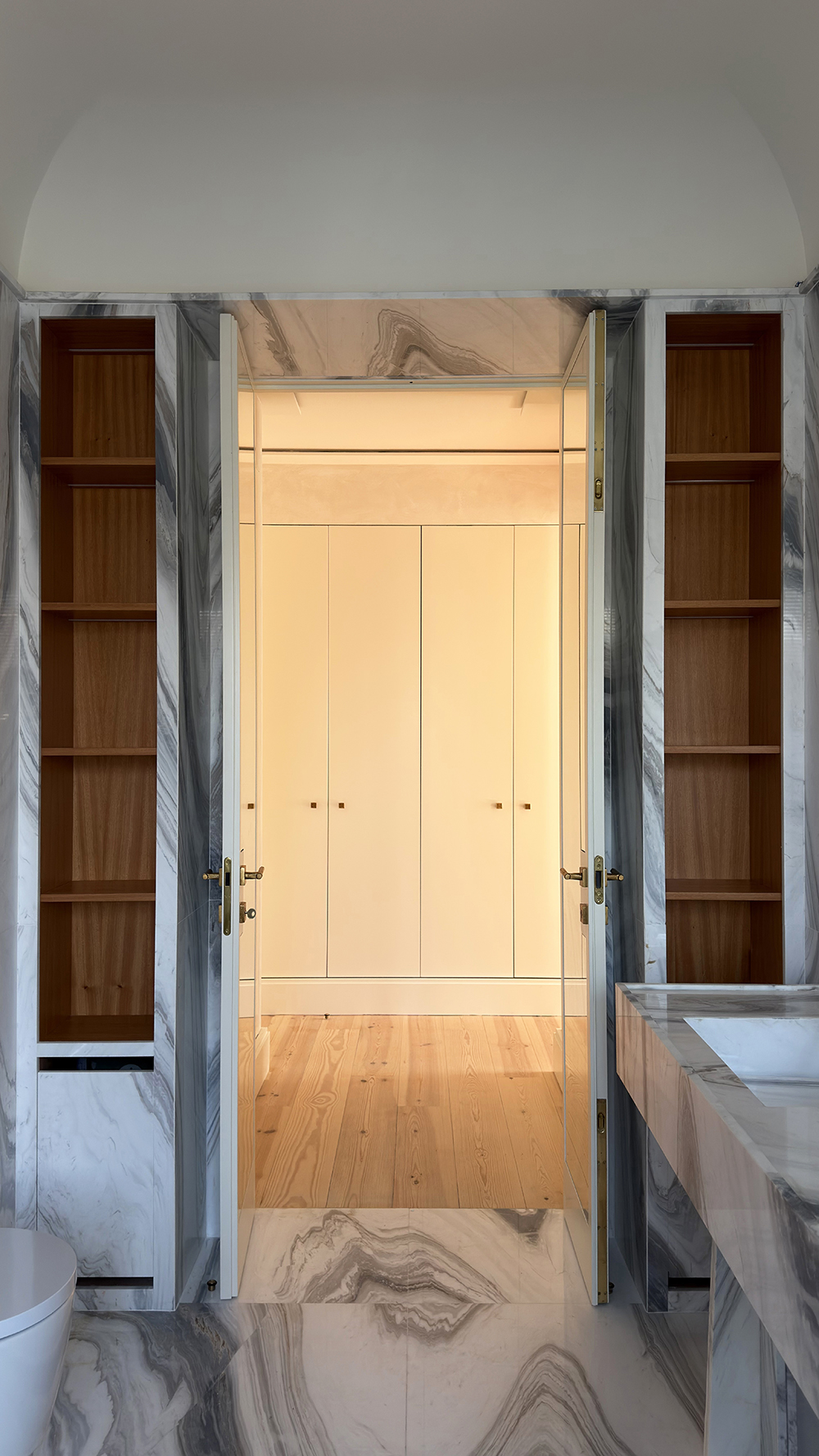
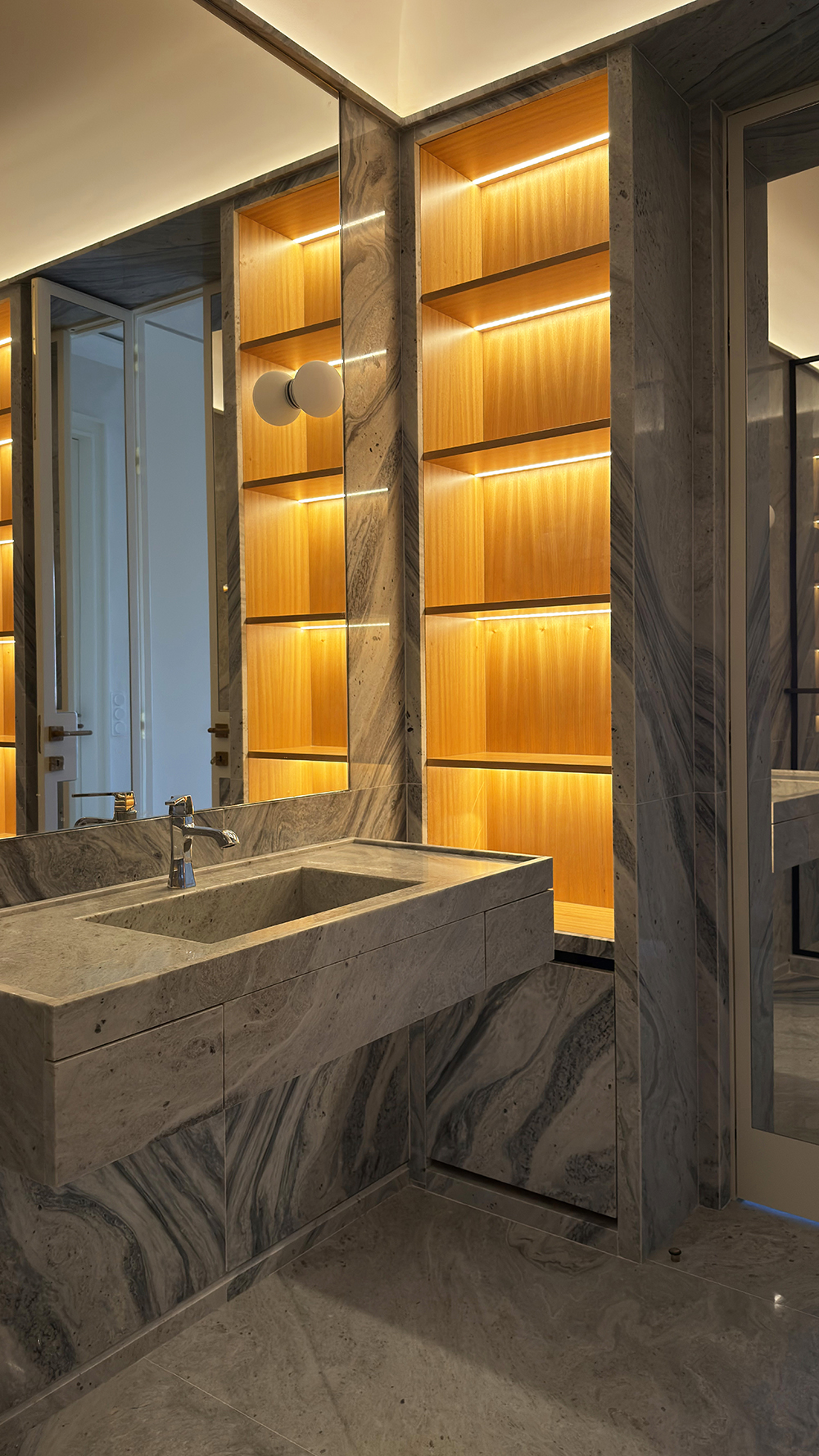
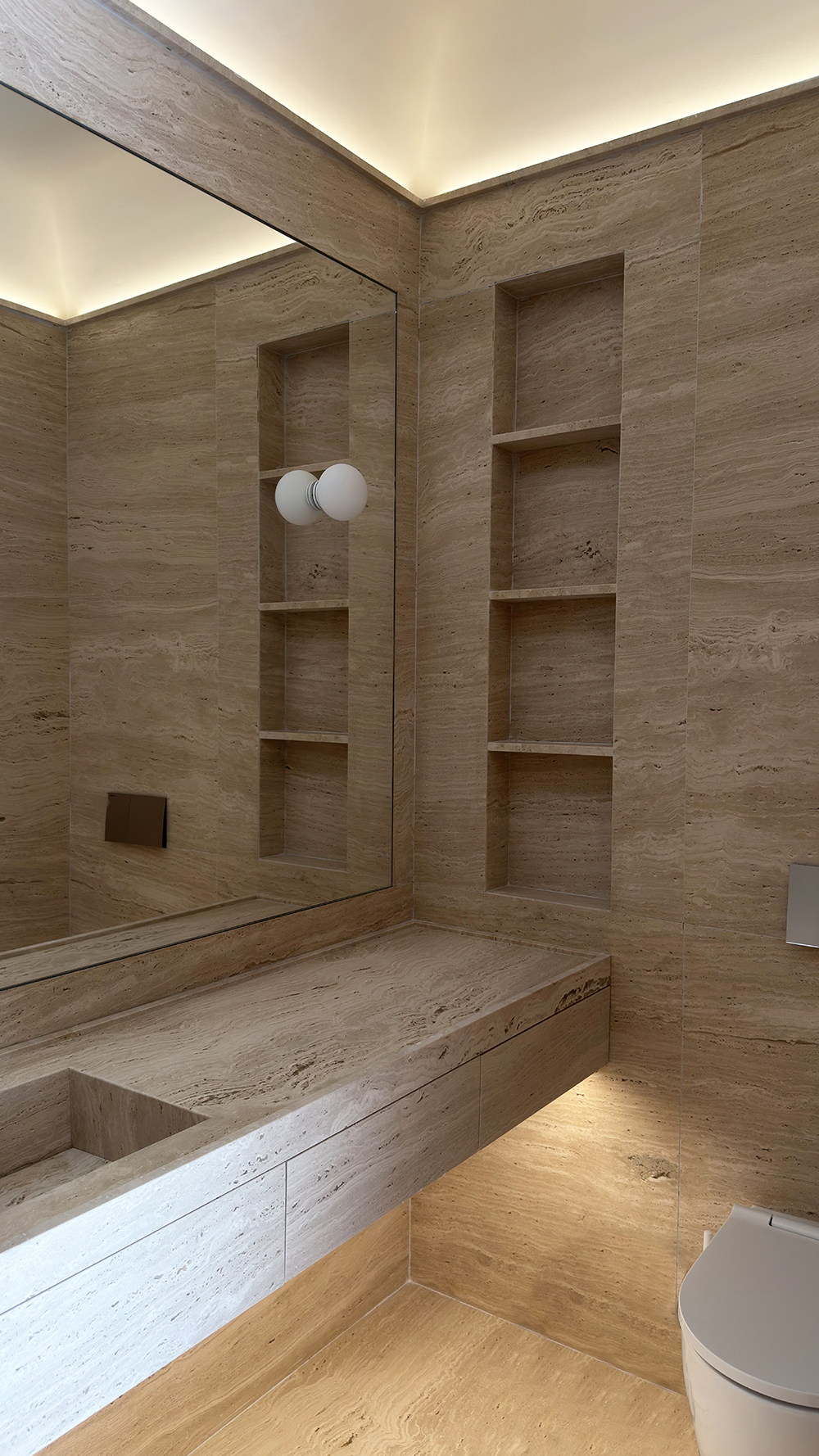
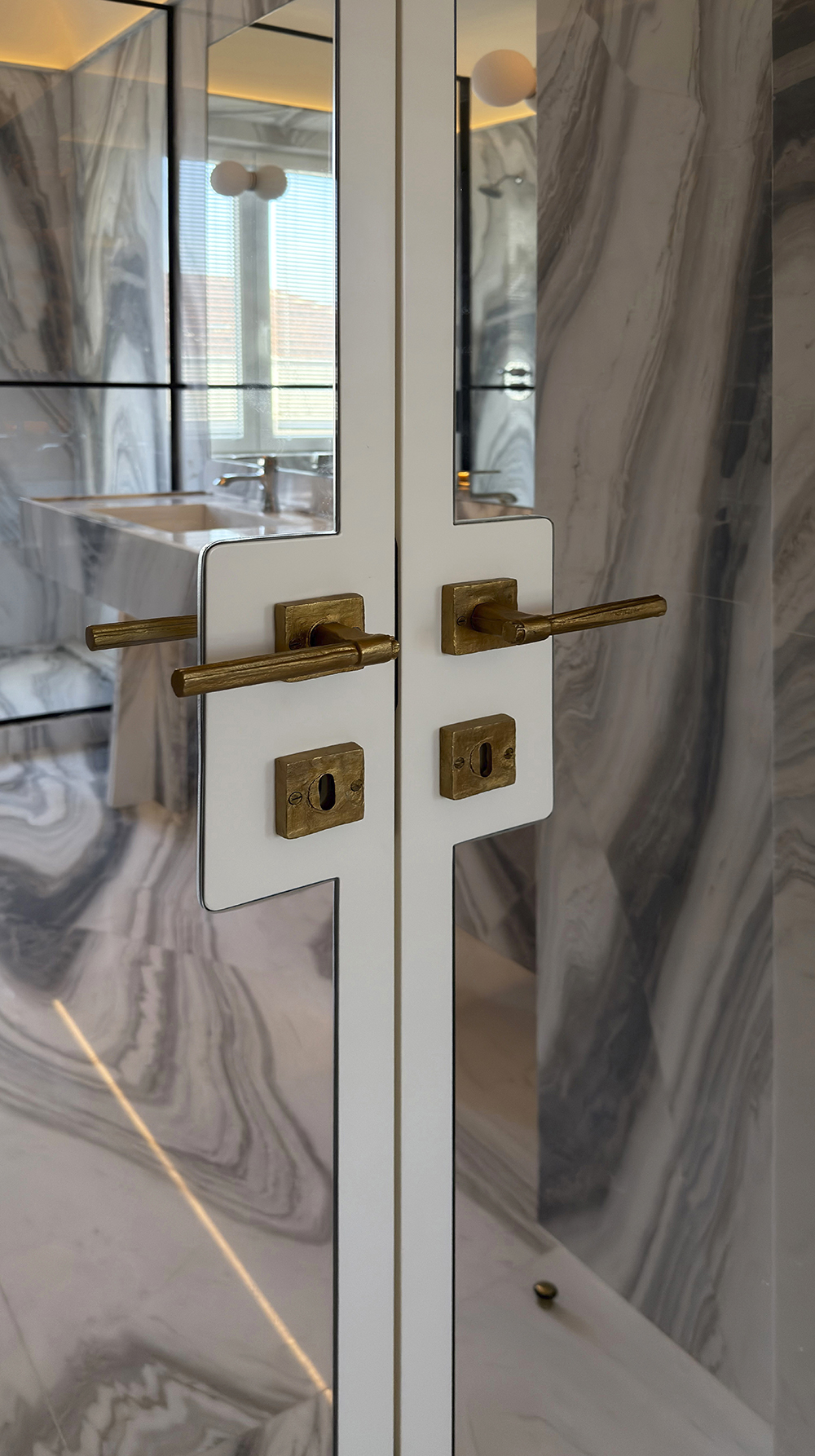
Greek stone in the master suite introduces dramatic veining reminiscent of ink landscapes.
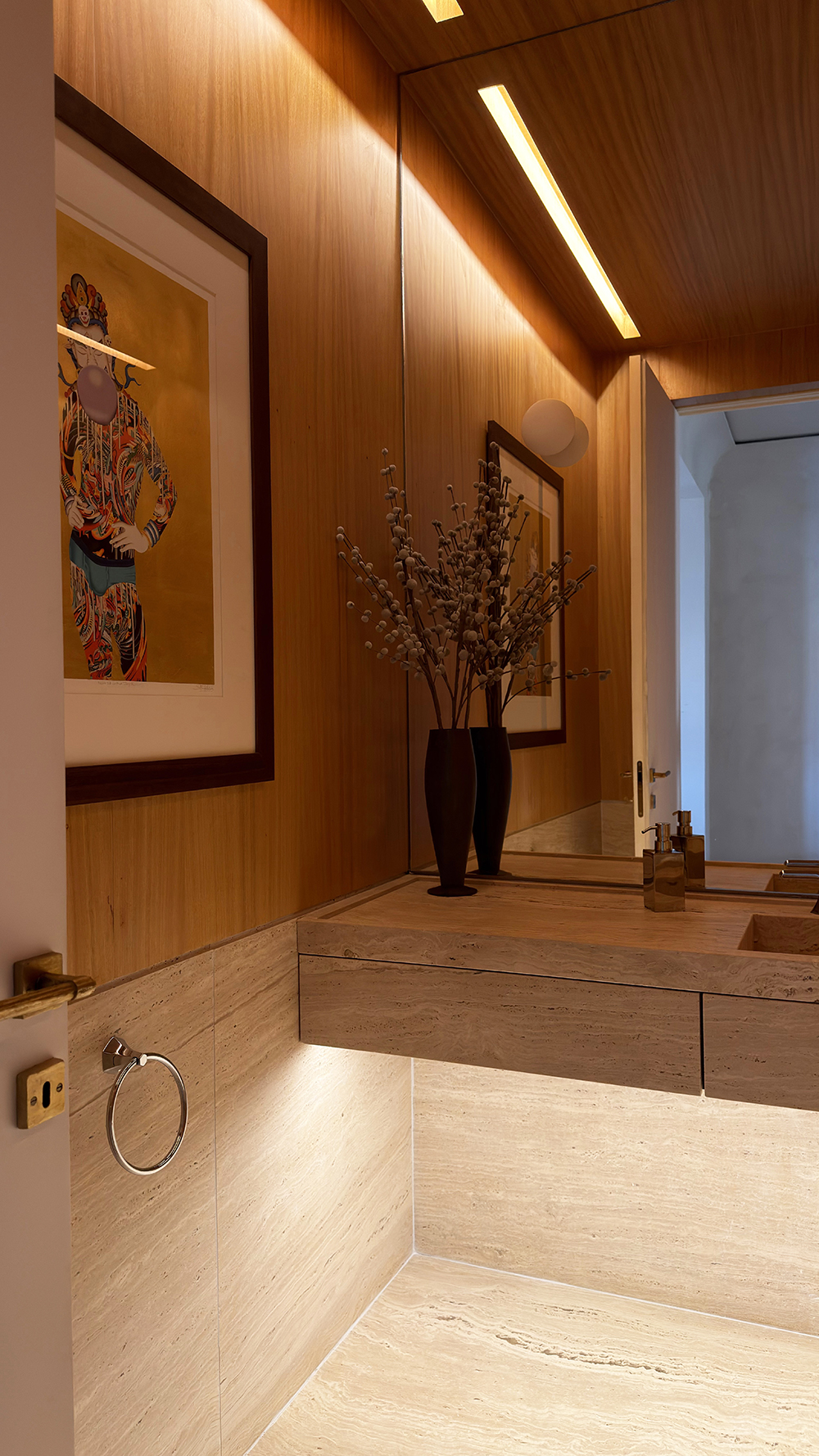
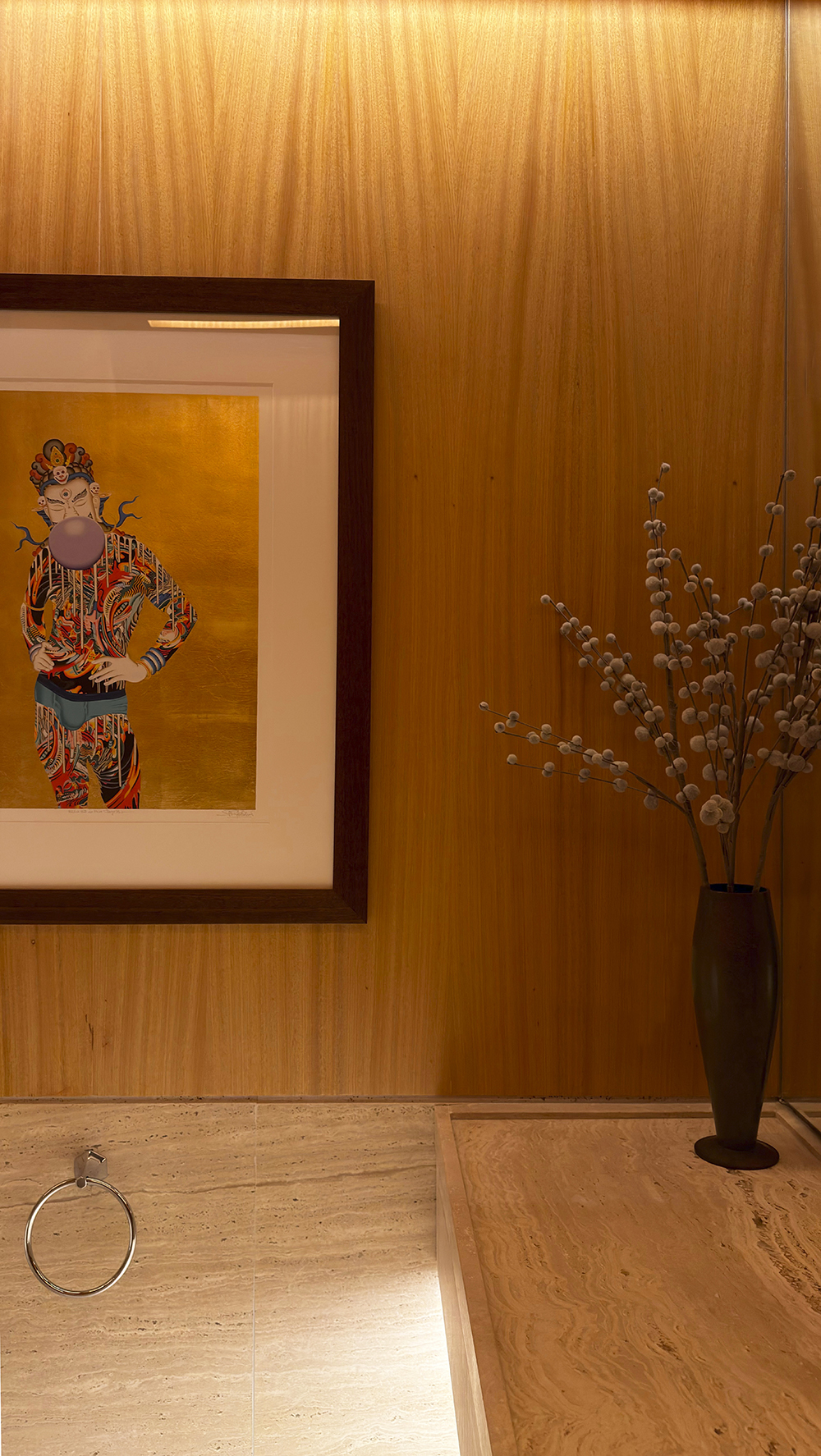
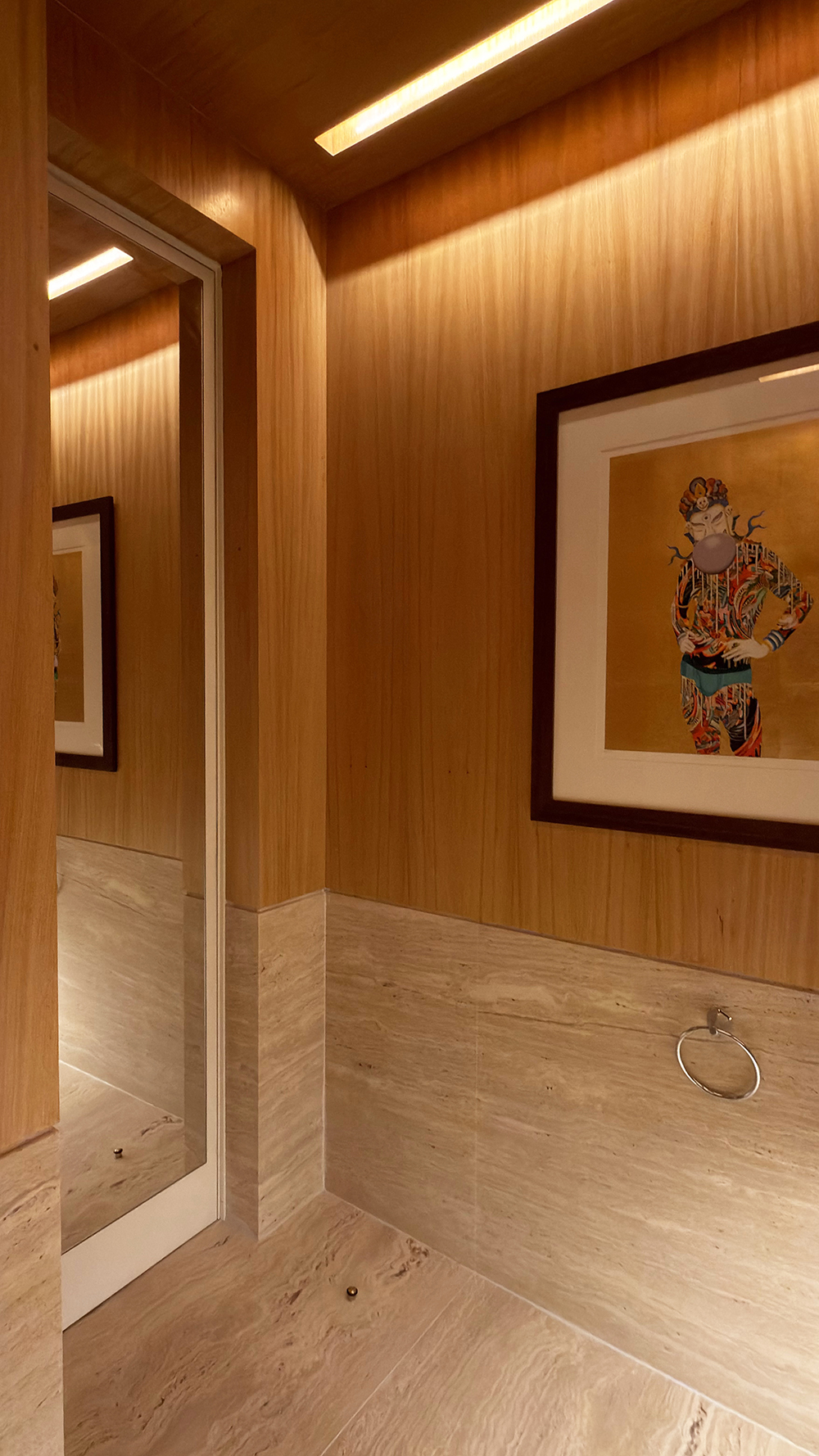
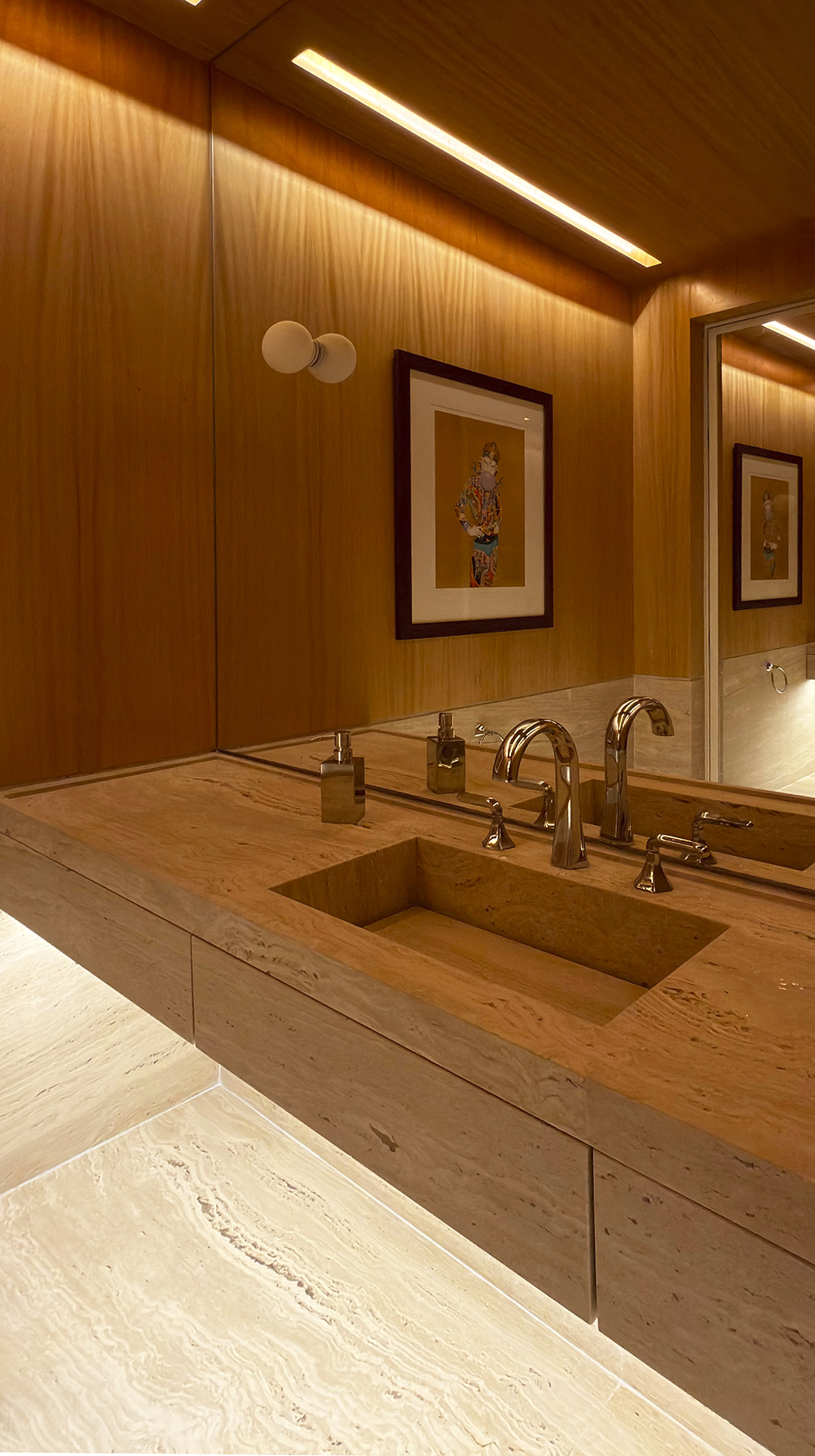
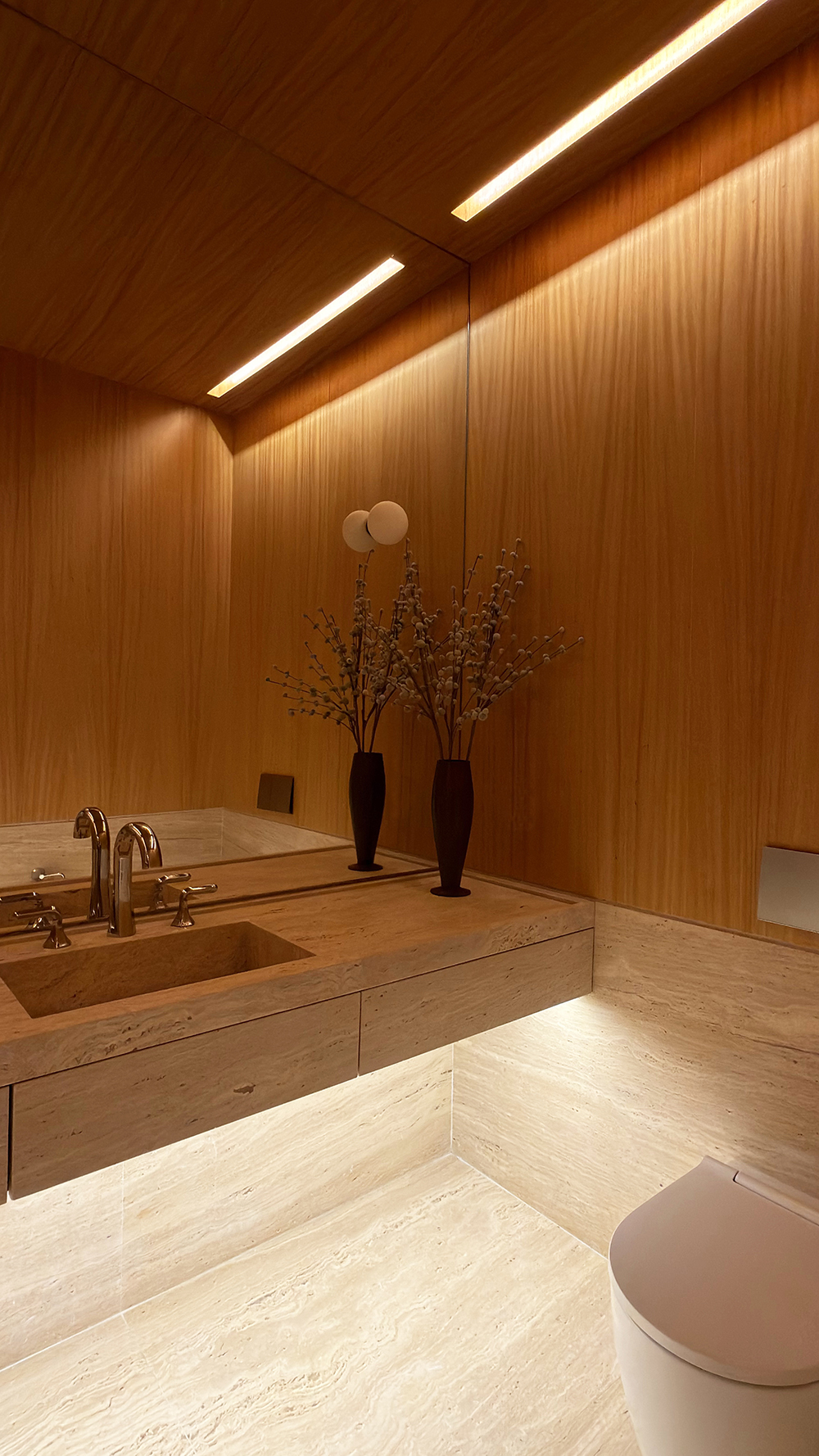
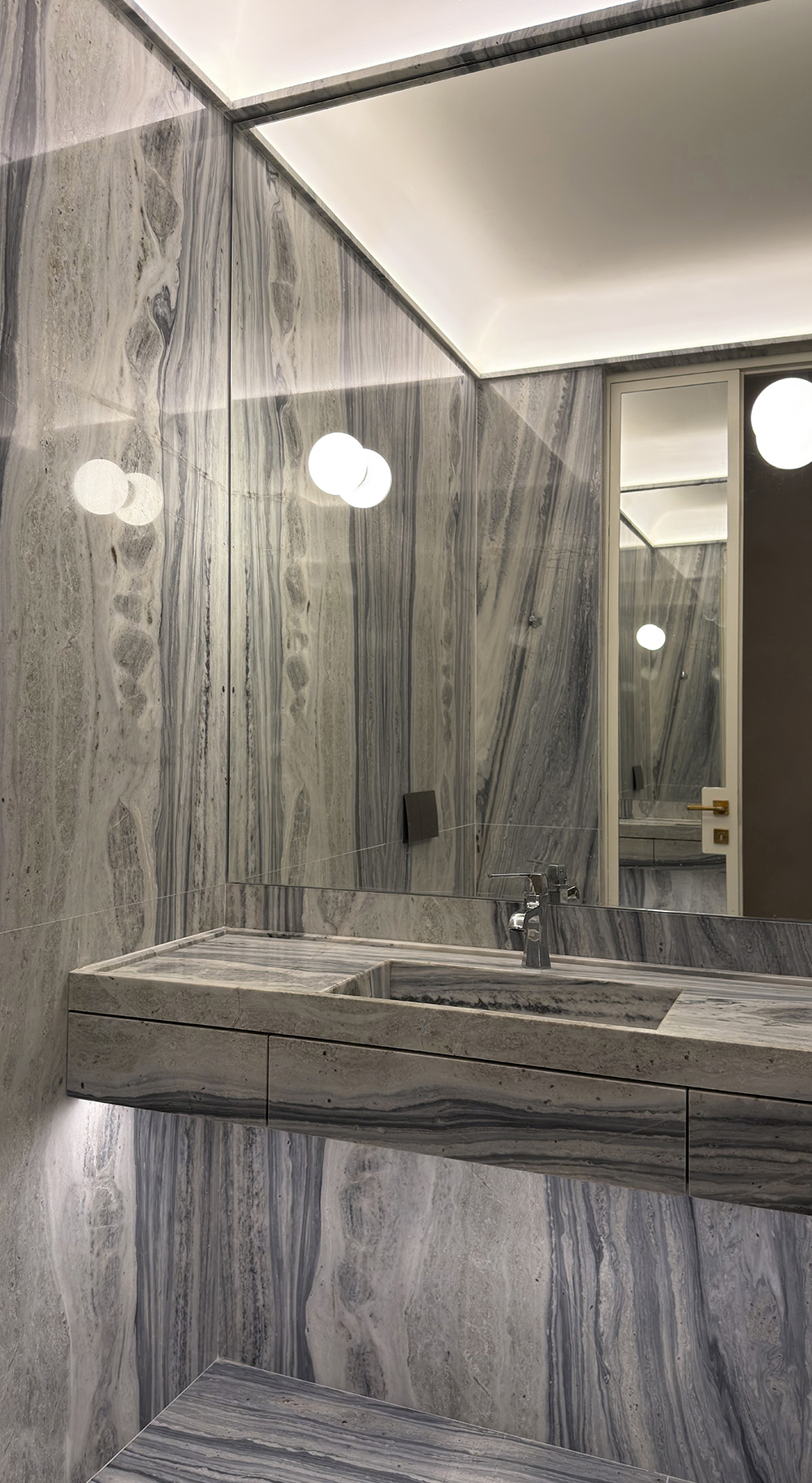
Blue marble in secondary bathrooms deepens the chromatic register. Andeira wood shelving adds warmth and subtle Asian reference.
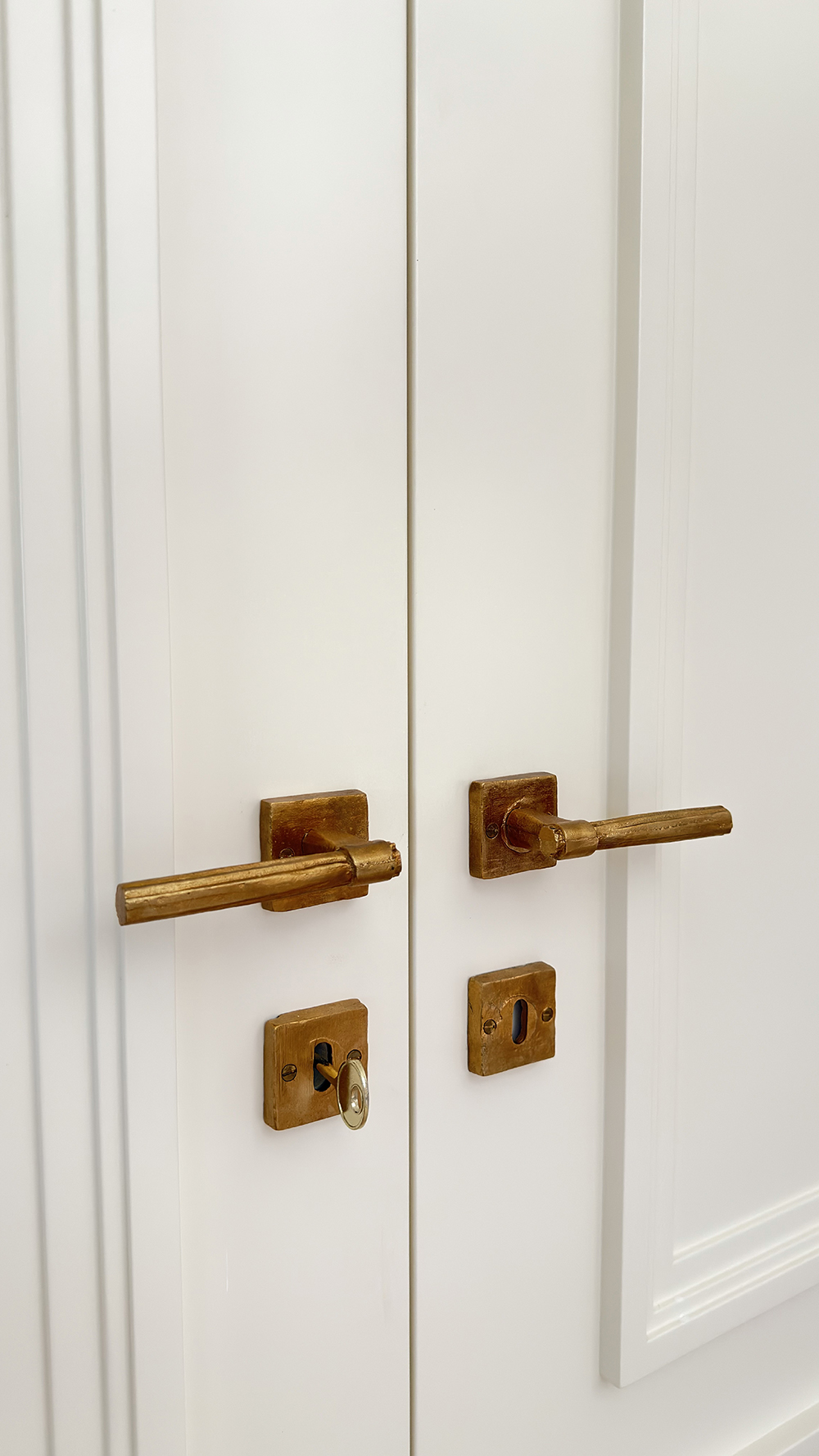
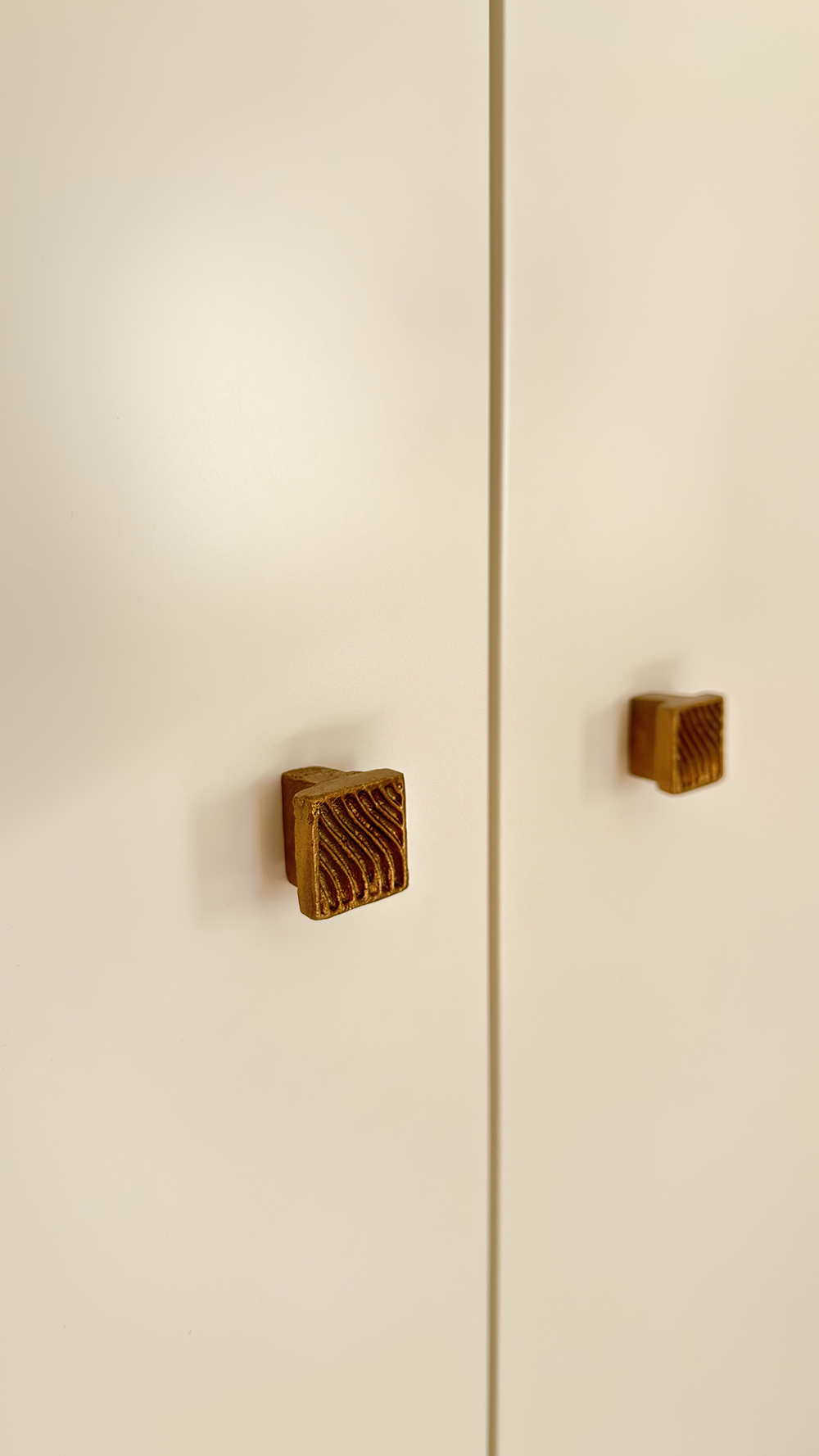
Materials remain pure: stone, wood, lime, iron, hand-crafted tile.
No ornament without purpose.
Portuguese Pombaline architecture provides structure.
Asian art provides atmosphere.
Contemporary intervention provides clarity.
Studio AVA does not mix styles.
It calibrates civilizations.
Lisbon
Date:
2025